Otto von Guericke University Magdeburg is a modern public research university founded in 1993 and located in Magdeburg. It was formed through the merger of three institutions, combining strengths in engineering, medicine, and education. The university focuses on engineering, natural sciences, medicine, and digital technologies, while also offering programs in economics, social sciences, and humanities.
With around 13,000 students across nine faculties, it emphasizes interdisciplinary research, innovation, and international collaboration, addressing real-world challenges in areas like neuroscience, renewable energy, and systems engineering.
| Acronym | OVGU |
| Nickname | Uni Magdeburg |
| Colour | Red and White |
| Founded | 1993 |
| Location | Magdeburg, Saxony-Anhalt, Germany |
| Address | Otto von Guericke University Magdeburg, Universitätsplatz 2, 39106 Magdeburg |
Otto von Guericke University Magdeburg has a distinctive profile. It aims to create a lean and sharply-defined structure with its main focus of expertise in the traditional areas of engineering, the natural sciences and medicine. It also views economics and management and the social sciences and humanities as essential disciplines for a modern university in the information age. The University sees its main task as raising the standard of education and scholarship through teaching and research.
As the man from whom we take our name, we are indebted to Otto von Guericke. His name represents:
Profile – Notwithstanding the concept of "universitas", Otto von Guericke University Magdeburg nevertheless sees itself as having a distinctive profile. It aims to create a lean and sharply-defined structure with its main focus of expertise in the traditional areas of engineering, the natural sciences and medicine. It also views economics and management and the social sciences and humanities as essential disciplines for a modern university in the information age.
As a bridge between Eastern and Western Europe the University’s task is to contribute to the thorough internationalisation of research and education as well as the establishment of closer cultural relations.
Community – Our University is a community of staff and students that is based on openness, trust, tolerance and cooperation. It aims to create a productive environment which promotes health and achievement. Equality of opportunity for women and men and helping our students and staff to reconcile their studies, career and family life are key obligations for us.
Teaching – When it comes to teaching, we are fully conscious of our responsibility to our students. We aim to deliver a very high standard of scientific education that is based on the latest research developments. We aim to encourage creative individuals who are capable of critical thought, can solve problems, work in teams and who have a sense of responsibility.
Our degrees aim to equip students for the world of work, although we place more emphasis on general work-place abilities than specific job-related skills. We promote life-long learning with a range of in-service and further education programmes.
Research – We pride ourselves on the high quality of our research and its level of scientific and social relevance. We consider the ethical implications of our research methods and their possible social and environmental consequences and give these a high priority.
We consider the integration of research and teaching and academic freedom to be essential principles. We place emphasis on achieving high levels of performance in the areas that make up the University's distinctive profile. We particularly encourage interdisciplinary and international projects.
Society – The University is funded from the public purse and has the right to self-govern as well as a duty to self-regulate. Our brief is to work in the interests of society and to inform the public of our activities. The University should take a critical approach towards current developments and make these critical views public.
We are conscious that the work and conduct of every member of the University contributes to the University's public image.
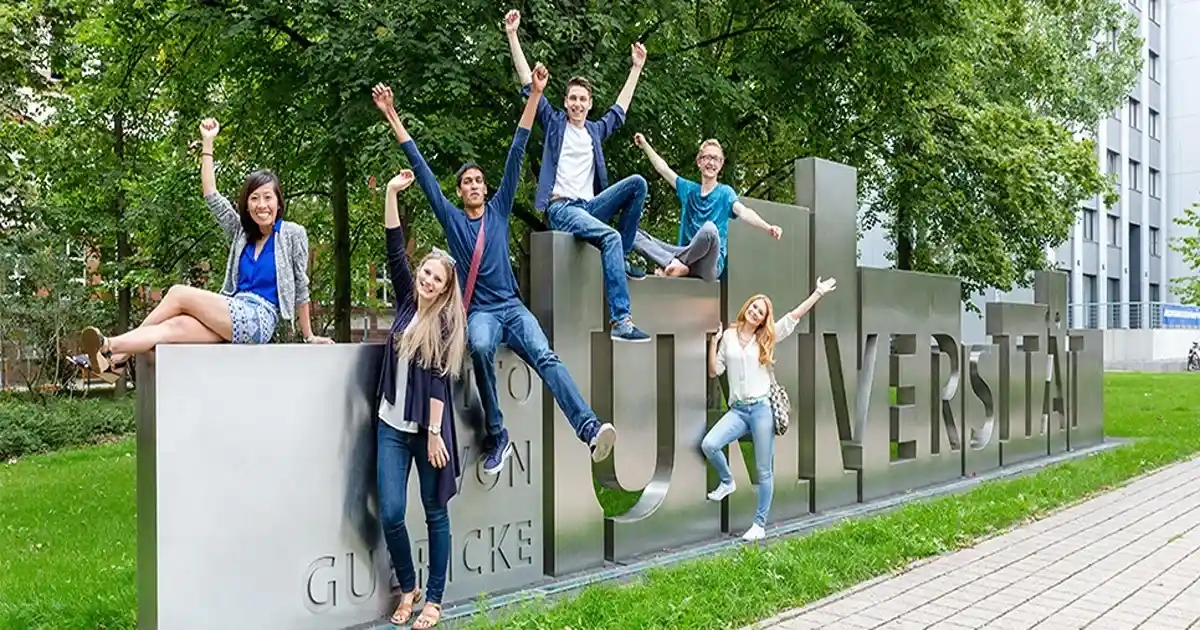
The teaching at the University of Magdeburg features a variety of forms of communication, which challenge students and make it possible for them to acquire knowledge and deal with problems and tasks independently. As a cooperation partner for the Olympic Support Centre for the state of Saxony-Anhalt, the University of Magdeburg offers the ideal study conditions for competitive sports people.
Otto von Guericke University Magdeburg is committed to freedom in research and teaching while addressing global and national challenges in technology, health, ecology, and society. Its researchers develop solutions, support informed decisions, and promote responsible innovation through interdisciplinary excellence in research, application, and knowledge transfer.
Otto von Guericke University Magdeburg stands for an open and transparent university culture. It sees dealing competently with diversity and cultural variety as an enhancement for university life and as a source of potential for society as a whole. Neither individual nor structural discrimination and disadvantage are tolerated, but instead made visible so that they can be changed.
If you want to study a degree programme leading to a Bachelor's degree, you need a higher education entrance qualification (HZB). These are certificates qualifying you to study in Germany, in particular, your school-leaving certificate. Depending on your country of origin, you may also need proof of a few semesters of study in your home country.
View the entry requirements on the study program page.
If you want to apply for a Master's study programme in Germany, you generally need to have completed a first degree in a related subject.
Your degree must be equivalent to a German Bachelor's degree.
The recognition of certificates as a higher education entrance qualification and/or as a Master's entrance qualification varies depending on the country of origin. There are also different requirements for different degree programmes. A decision on admission / rejection for the respective program you applied to will only be taken after all of the needed application documents have been reviewed.
Please refer to the descriptions of the study programmes for additional requirements.
At the end of the online application, print out the registration/enrollment application (application for admission). The required documents can be found here.
If you are a citizen of a foreign country and have a foreign secondary school diploma, you must apply via uni-assist. If you have a German Bachelor degree, apply directly to OVGU.
Email: [email protected]
Phone : +49 391 67-01



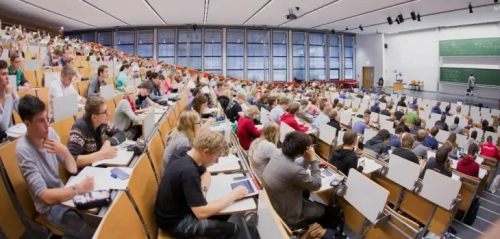
Prof. Dina Kuhlee studied Business Education, Business Administration and Comparative and International Education at the Humboldt University of Berlin and the University of Oxford. She completed her doctorate in the field of vocational and business education at the Humboldt University of Berlin.
She worked as a research assistant and academic councillor in research and teaching in the field of vocational and business education at the Humboldt University of Berlin and the University of Oldenburg and was a deputy professor and department director of vocational, business and technology education (BWT) at the University of Stuttgart.