ListOfUni

Rheinisch-Westfälische Technische Hochschule Aachen (RWTH)

North Rhine-Westphalia, Germany
Visit School Website
  • 12 Faculties
  • 1870Founded
  • YesAccept Int. Studs
  • YesDistance learning

About

At RWTH, we think ahead – developing innovative responses to global challenges that are sustainable, inclusive, meaningful, and above all: collaborative.

RWTH Aachen University is a prestigious technical university founded in 1870. It is recognized globally for excellence in engineering, science, technology, and applied research. The university collaborates closely with major industries and research institutes, providing students with practical experience and strong career opportunities. It is also a member of the German Excellence Initiative, which supports top research institutions in Germany.


Acronym RWTH
Nickname RWTH Aachen
Motto / Slogan Thinking the Future
Colour White and Blue
Founded 1870
Location Aachen, North Rhine-Westphalia, Germany
Address Templergraben 55, 52062 Aachen, Germany

Mission

The mission of RWTH Aachen University is to advance knowledge through innovative research, high-quality education, and strong collaboration with industry and society, while training future leaders in science, technology, and engineering.
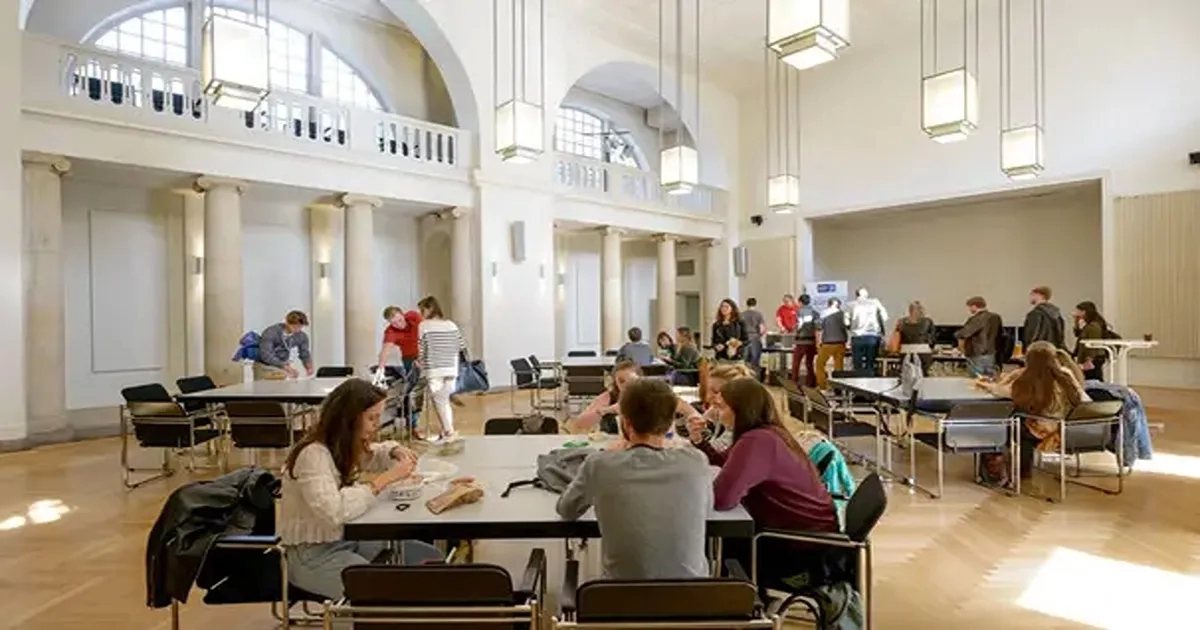
Rheinisch-Westfälische Technische Hochschule Aachen

Main Academic Divisions (Faculties)

  1. Faculty of Mathematics and Natural Sciences
  2. Faculty of Architecture
  3. Faculty of Civil Engineering
  4. Faculty of Mechanical Engineering
  5. Faculty of Georesources and Materials Engineering
  6. Faculty of Electrical Engineering and Information Technology
  7. Faculty of Arts and Humanities
  8. School of Business and Economics
  9. Faculty of Computer Science
  10. Faculty of Medicine

Reasons to Study at Rheinisch-Westfälische Technische Hochschule Aachen

  1. Excellence

    We treat change as a mandate to innovate –  transforming RWTH into a next-generation university that forges new paths in science, industry, and society through excellence, responsibility, and a strong sense of community.

  2. Sustainability

    At RWTH, we are committed to advancing sustainability across all areas of the University – by minimizing our environmental impact, working toward climate neutrality, and fostering a culture of responsibility, inclusion, and stewardship.

  3. Diversity

    At RWTH, gender equity, equal opportunity, and a deep appreciation for diversity are core values that shape our culture – across research, teaching, learning, careers, and leadership.

  4. Excellence In Research

    Excellence in research is central to RWTH Aachen University’s mission. When brilliant minds from different disciplines have the freedom to collaborate, explore, and experiment, they create real solutions for today's most pressing technological and societal challenges.


  5. Excellent Teaching and Learning at RWTH

    At RWTH, we are committed to educating highly qualified and responsible graduates who will contribute to science, industry, and society. Our teaching and learning approach is skills-based, research-informed, and practice-oriented. Excellence in teaching means placing students – in all their diversity – at the center of the learning experience.


Admission

Undergraduate Admission Requirement

  1. University Entrance Qualification Certificate
  2. Proof of Language Skills
  3. Complete Application On Time

Postgraduate Admission Requirments

  1. First Qualifying Degree Required
  2. Language Proficiency
  3. Complete Application by the Deadline

All required application materials must be submitted by the published deadline. Late or incomplete applications cannot be considered. For a full list of required documents and submission instructions, see our application process page.

How To Apply For Admission

Complete Application On Time

An extremely important requirement for a successful application is that all your documents are complete and submitted on time. You can upload all your application documents on your online application on RWTHonline. You can find out the required documents for your application, as well as the current application deadlines on our Application pages.


Admission Contacts

Email: [email protected]
Phone : +49 241 80-90674

Apply For Admission

Campus Tour

Facilities

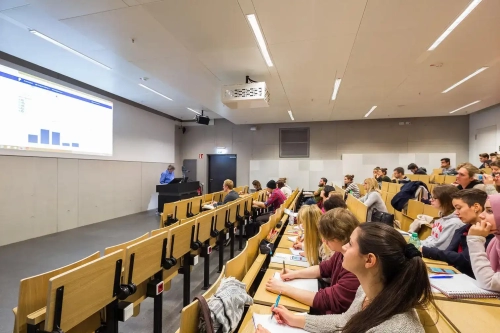
  • Classrooms
  • Library
  • Laboratory
  • Research Center
  • Accommodation
  • Hospital
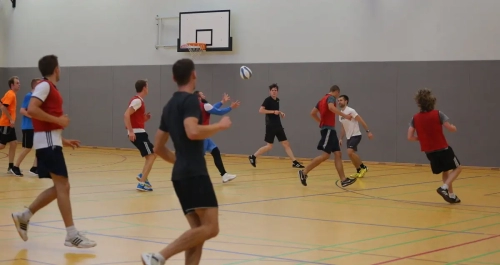
  • Sports
  • Gym
  • ICT
  • Cafeteria
  • Library: The University Library is the main service providing access to literature and information at RWTH Aachen University. The Library primarily provides resources for the purposes of teaching, research, and learning. Furthermore, the Library services are available to our partners as well as other target groups at RWTH Aachen University. 


  • Gym: The RWTH GYM offers a comprehensive and personalized fitness experience on over 1000 m². Train at over 180 workout stations and benefit from our professional course offerings and supervision.


School Contact

Address

Templergraben 55, 52062 Aachen, Germany

Phone Number

+49 241 801

Website Address

https://www.rwth-aachen.de/cms/~a/root/?lidx=1

Accreditations

Accredited by the German Accreditation Council for higher education programs in Germany.


Vice Chancellor

Prof. Ulrich Rüdiger

Ulrich Rüdiger has been rector of the University of Konstanz since 2009. In 2014, he was re-elected for a second term of office from 2015 to 2023. After studying physics and completing his doctoral studies and habilitation in Aachen, New York, San José, and Ithaca, he was appointed professor of experimental solid-state physics at the University of Konstanz. He has been vice-president for researc... read more
h and early career researchers in the HRK or German Rectors' Conference, and member of the HRK's Permanent Commission for Research in Germany and Europe since 2014.


Academic Staff

  • Thomas Trännapp

    Chancellor Thomas Trännapp will be the next chancellor of RWTH Aachen University. The university electoral assembly voted in favor of the 53-year-old, who currently serves as the permanent deputy chancellor at ... read more
    RWTH. Trännapp will succeed Manfred Nettekoven, who has held the office since 2006, taking office on June 1, 2025. The chancellor’s responsibilities include, among other things, managing the Central University Administration, the budget, legal affairs, construction, and real estate management, as well as environmental protection, sustainability, and safety.


  • Ute Habel

    Vice-Rector for International Affairs

    Post-doctoral Lecturing Qualification (Habilitation), Faculty of Psychology, University of Vienna
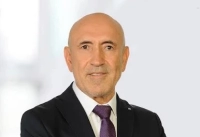
  • Sandra Korte-Kerzel

    Vice-Rector for Research
  • Joost-Pieter Katoen

    Vice-Rector for Teaching and Learning The Vice-Rector for Teaching and Learning oversees fundamental and cross-faculty matters related to teaching and learning. Key responsibilities include:

    • Developing and updating curricula... read more
      i>
    • Monitoring teaching quality through evaluations and feedback mechanisms
    • Supporting instructors in their pedagogical work
    • Providing support programs for students
View More Staff

Notable Alumni

View More Alumni

History

It is Monday, October 10, 1870: a bitter battle is raging in Artenay, France in the midst of the Franco-German war. Meanwhile, in Aachen, a group of young people are entering a new and very peaceful phase of their lives. They are the first to attend Aachen’s polytechnic, Königliche Rheinisch-Westphälische Polytechnische Schule zu Aachen, an innovative higher educational institution that will prepare them for their professional future. In the industrializing society of the time, the institution expands the traditional humanistic educational approach with one that is highly practical and oriented toward science.

Mens agitat molem, the mind moves the mass, which is carved in s... read more
tone at the polytechnic’s chemical laboratory, evokes this idea to society and the concept clearly seems to meet a need. The institution started its first academic year in 1870/1871 with a total of 201 students, listeners, and guest students. At that time no one would have guessed that 150 years later it would have turned into the largest technical university in the German-speaking world in terms of student numbers.

The path to this success was however not without its obstacles and this was already apparent in the founding phase. The first ideas on the polytechnic date back to at least 1857, when several cities in the local Rhine area were competing to acquire the attractive educational institution. Aachen was publicly promoted for this since 1858 as the city was the center of Germany’s most important industrial region. Cologne and Aachen finally competed head-to-head. The key factor in the decision in Aachen’s favor was the outstanding commitment of an equally innovative institution.

Founded in 1825, the Aachener Verein zur Beförderung der Arbeitsamkeit, roughly translated as the Aachen Association for the Promotion of Industriousness, combined progressive civic commitment and entrepreneurship to create a very modern holistic concept. It optimized the industrialization process by linking education and financial returns. The association therefore provided enormous financial backing for initial and follow-up financing. The location was officially settled when the King signed an agreement for Aachen to acquire the sought-after institution on November 14, 1863.

The institution’s foundation stone was laid on May 15, 1865, but its specific educational focus was not yet fully established at this point. When it eventually opened, it already had nine departments: mathematics, physics, chemistry, biology, pharmacy, civil engineering, surveying, mechanical engineering, and metallurgy. Mining and electrical engineering followed as the first additions later on.

From the very beginning, teaching was structured on a par with other universities. Consequently, ten years after its foundation, it is reestablished as a technical university with a constitution from the Rector’s office and the right to pursue a Habilitation, or postdoctoral teaching qualification. Technical universities did not fight for the right to award doctorates until the end of the 19th century, marking a further milestone in their educational emancipation.

RWTH’s Journey to Becoming a "Scientific Enterprise”

From 1898 onwards, a two-year course of study in trade was occasionally part of the curriculum. This may well be understood as the origin of industrial engineering; the term was already familiar at the time. Lecturers also had practical experience; mixing theory and practice was expressly desired and already recognized as a promising combination.
 

In 2003, the portfolio was topped off with courses of study in industrial engineering and management, including the professorship Business Administration and Sciences for Engineers and Natural Scientists with a focus on entrepreneurship. By this point, 239 new businesses had already been founded in Aachen, almost exclusively by RWTH graduates.

The highly dynamic Melaten campus, featuring numerous registered companies also acts as a beacon for transfer into practice. The result: in 2019, RWTH generated third-party funding to the sum of 427 million euros, of which 103 million euros from industry cooperations. The total amount is the highest of all universities in Germany.

Since 2008, RWTH’s extraordinary success in Germany’s Excellence Initiative has demonstrated how highly valued the hybrid concept of science and practice is. In light of the rapid digitalization of science, economy, and society, this approach is more on topic than ever today. Accordingly, RWTH Aachen University is committed to a sustainable, interactive transfer of innovation and technology that extends far beyond the Aachen region. A basic prerequisite for this is constantly optimizing excellent teaching, including teaching methods and crucial reflected agility with research activities, which the University will consistently continue to develop. The University feels this is its duty toward its students, who, in winter semester 2019/20 numbered 45,628 (with 11,280 coming from abroad), as well as its 10,000 employees and, last but not least, society as a whole.