
Technische Hochschule Köln – abbreviated as TH Köln – University of Applied Sciences – sees itself as University of Technology, Arts, Sciences. With its disciplinary and cultural diversity and openness, TH Köln’s activities are aimed on cultural and technological breakthroughs of high societal relevance; TH Köln contributes substantially to resolving social challenges. As a community of faculty and students we see ourselves as a learning organization forging new paths. For instance, TH Köln is one of the pioneers in the field of development and formation of concepts for higher education didactics.
Our subject range includes the fields of Applied Natural Sciences; Architecture and Construction; Information and Communication; Computer Science; Engineering; Culture; Society and Social Sciences as well as Business Studies. More than 100 degree programs are offered as full-time programs or in some cases as career-integrated or part time programs. As a place where research based learning and academic education take place, the university nurtures prospective scholars through cooperative dissertations. Annually, about 4,700 students take up their studies at TH Köln. Overall 21,500 students from about 120 different countries along with 440 professors and 1,600 staff employ their potential.
Research mainly focuses on future-related issues, including climate change, energy supply, health and food safety as well as demographic changes. While developing solution strategies for the most important questions of our time, researchers offer their professional expertise in interdisciplinary interaction. At the same time, they closely collaborate with local, national and international cooperation partners, including 343 international institutions of higher education. The university offers its researchers an attractive sphere of activity. The quality seal “HR Excellence in Research” awarded by the European Commission certifies that TH Köln meets international standards in the field of human resources development.
TH Köln also puts emphasis on quality in advanced academic training and promotes competencies as well as personal and professional development through a variety of programs offered to those who are interested in further education, to those who are currently working as well as to those who are returning to work.
TH Köln’s campuses are located in Cologne, Gummersbach and Leverkusen.
| Acronym | TH Köln |
| Colour | Milano Red and Dark Red Accents |
| Founded | 1971 |
| Location | Cologne, North Rhine-Westphalia, Germany |
| Address | Cologne University of Applied Sciences Claudiusstraße 1, 50678 Cologne. Postal address: Gustav-Heinemann-Ufer 54 , 50968 Cologne. |
TH Köln’s mission is to be a partner and agent for a complex world, dedicated to generating knowledge that directly benefits society. It transcends traditional academic boundaries to address practical, real-world challenges through solution-oriented research and cooperative teaching, ensuring science is made relevant for business, culture, and civil society.
The university views itself as a "University of Technology, Arts, Sciences," pioneering a new kind of modern institution. Its vision is to create an open, creative, and dynamic environment where enthusiastic faculty and students can collaborate, break down barriers, and continuously evolve as a forward-thinking, learning organization.
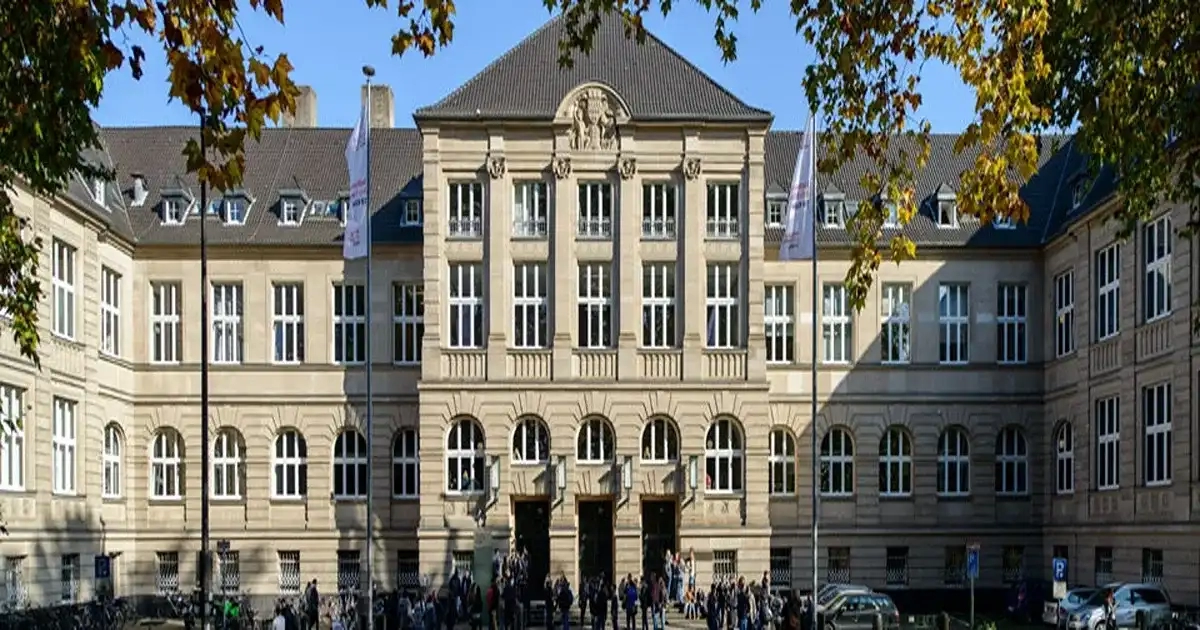
Cologne University of Applied Sciences (TH Köln) has enshrined sustainability as a strategic goal in its 2030 university development plan. With its twelve faculties, it is particularly well-positioned to integrate all aspects of the "sustainability triangle" —ecology, economics, and social justice— into its research and teaching. In its annual environmental statement, it not only documents its environmental guidelines but also makes its resource consumption transparent.
Equal opportunities, (gender) diversity, and equality are understood as integrated concepts at TH Cologne. They are committed to creating a gender-equitable and respectful environment in which all students, lecturers, and staff can learn, teach, research, and collaborate on an equal footing, regardless of gender, origin, or personal characteristics.
They maintain close relationships with other universities not only within Germany but also internationally. Together with their approximately 350 partner universities abroad, they offer a wide range of study abroad opportunities and funding options, and they support student mobility. For example, several Master's programs are offered entirely in English. One-third of their international students come from overseas.
To study at TH Cologne, you need a general university entrance qualification (Abitur), a subject-specific university entrance qualification or a qualification recognized as equivalent by the relevant authority (district government, etc.).
Furthermore, many degree programs require an internship before starting studies, and some degree programs also require proof of special subject-specific aptitude.
International Students:
Education systems can vary greatly around the world. Therefore, each country has different requirements that applicants must meet to study in Germany. The International Degree-Seeking Students team can help you determine which admission requirements you need to fulfill.
Language Requirements
For German-language degree programs, you generally need to demonstrate at least a C1 level of German proficiency at the time of application. Please find out about the language certificates accepted by TH Köln .
For English-language degree programs, you must provide proof of sufficient English language skills. Information on this can be found on the page for the respective degree program under the heading "Application".
Some degree programs may have additional admission requirements, such as:
To study at TH Cologne, you need a general university entrance qualification (Abitur), a subject-specific university entrance qualification or a qualification recognized as equivalent by the relevant authority (district government, etc.).
Furthermore, many degree programs require an internship before starting studies, and some degree programs also require proof of special subject-specific aptitude.
International Students:
Education systems can vary greatly around the world. Therefore, each country has different requirements that applicants must meet to study in Germany. The International Degree-Seeking Students team can help you determine which admission requirements you need to fulfill.
Language Requirements
For German-language degree programs, you generally need to demonstrate at least a C1 level of German proficiency at the time of application. Please find out about the language certificates accepted by TH Köln .
For English-language degree programs, you must provide proof of sufficient English language skills. Information on this can be found on the page for the respective degree program under the heading "Application".
Some degree programs may have additional admission requirements, such as:
To be admitted to an undergraduate degree program at TH Köln, an online application is required, which must be addressed to TH Köln.
International Students:
uni-assist – the application and service center for international students – works on behalf of numerous German universities. It checks your application for completeness and whether you meet all the admission requirements for your desired degree program. More
Some international students must apply directly to TH Köln via the online application system. Please check the table above for details. More
Email: [email protected]
Phone : +49 221-8275-5555, +49 221-8275-2910






These included the Cologne Crafts Schools, the State Engineering Schools for Mechanical and Construction Engineering, the Cologne College of Higher Education for Business, the German Insurance Academy, the Cologne State College of Higher Education for Photography, the Cologne College of Higher Education for Social Work, the Gummersbach Campus, the old College of Higher Education for Librarianship and Documentation. Completely new chairs such as Restoration and Conservation, Design and the Institute for Technology and Resources Management in the Tropics and Subtropics were added ... read more
In September 2015, Cologne University of Applied Sciences became TH Köln - Technology, Arts, Sciences.