

Technische Universität Braunschweig is one of Germany’s oldest and most prestigious technical universities, located in Braunschweig. It is part of the TU9 alliance of top engineering universities and is recognized for excellence in engineering, natural sciences, and interdisciplinary research.
The university works closely with industry and research institutes, focusing on areas like mobility, health engineering, and future cities. It provides a research-driven learning environment with strong international collaboration.
1745: The founding date of the Collegium Carolinum is clearly visible on the facade of the old building. Thus, the roots of today's Technical University of Braunschweig were laid 275 years ago.
| Acronym | TU Braunsc |
| Motto / Slogan | Nec aspera terrent They are not terrified of the rough things |
| Colour | Red and White |
| Founded | 1745 |
| Location | Braunschweig, Lower Saxony, Germany |
| Address | Technical University of Braunschweig, Universitätsplatz 2, 38106 Braunschweig, P.O. Box: 38092 Braunschweig |
Based on the central administration's mission statement with the profile "Shaping quality and service together", the central administration's executives, together with the Chancellor, have developed the core elements of the central administration strategy.
These core elements describe the long-term development activities of the central administration and thus form a secure framework for day-to-day work. The key points provide a reliable orientation for the future and are reviewed annually to ensure that they are up to date. At the same time, it is important that all employees of the central administration align themselves with the strategic core points and participate in discussions on them in the respective departments and staff units.
We have ambitious plans for our University Development Initiative 2030: as a university, we are taking responsibility for helping to shape social transformation and creating scientific progress for the benefit of its development.
Our university is part of a regional scientific ecosystem that is internationally anchored and visible through strong partnerships. With this vision, we want to transcend our disciplinary boundaries and fully embrace sustainable values, diversity and active knowledge and technology transfer. This aspiration that we have set ourselves is fully in line with the standards of a university with excellent research, innovative teaching and excellent study conditions.
With the University Development Concept 2030, we have laid the foundation for our vision.
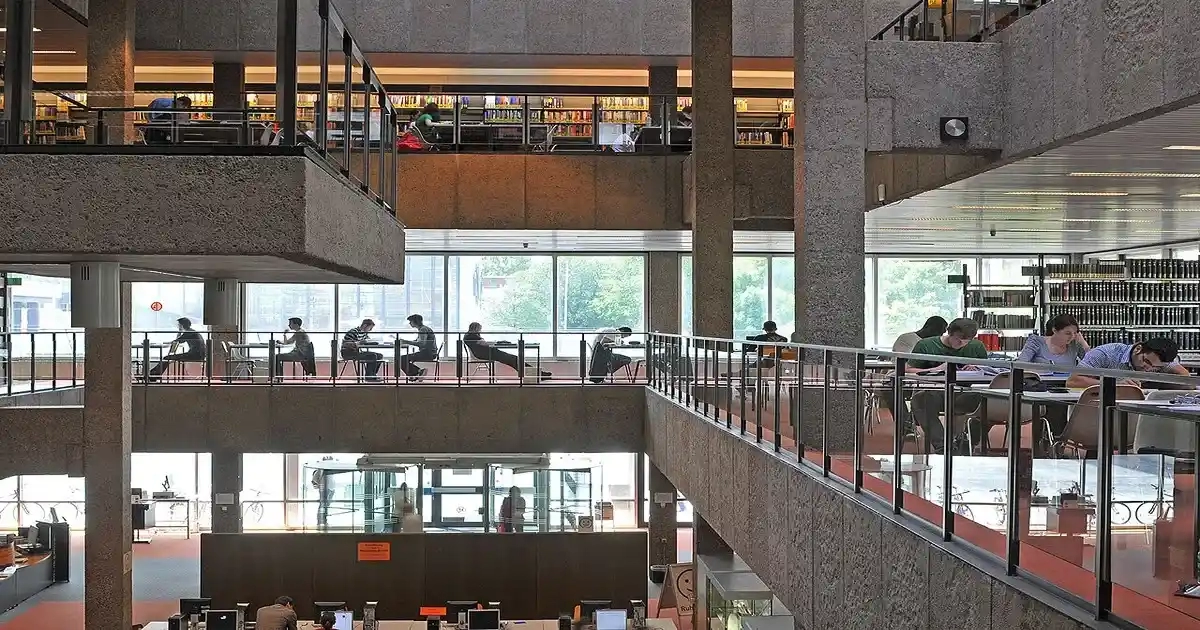
Research:
The Technical University of Braunschweig is a long-established technical university with a clear profile in research and teaching. It boasts:
It belongs to the TU9 group and is one of the top 9 universities in Germany in its core engineering subjects.
Teach:
Recruitment and Staff Development:
A key prerequisite for the success of our university is competent and motivated staff in science, technology and administration:
Strategic Capability/Governance:
At our university, you'll learn to think ahead and bring innovative ideas to life. Our research-oriented teaching will enable you to contribute to sustainable solutions that take the future into account.
We are a university where everything is within easy reach: lectures, the cafeteria, the library, or the student café – all close together. The personal connection to our lecturers is just as short – you'll always find open doors for a respectful exchange.
During your studies, you'll live in an affordable yet vibrant city. This is one reason why many of our students stay in Braunschweig and the surrounding region even after graduation.
We are networked with internationally operating companies based in Braunschweig and the surrounding region. This allows you to make valuable contacts and learn from practical experience even during your studies.
The world is diverse. And so are we. We want everyone to have equal opportunities. As a cosmopolitan and international university, we create space for diverse perspectives and genuine exchange.
You can apply to study at the TU Braunschweig if your qualifications are sufficient for study at an university in your home country. This means:
In some cases we may also require that you have studied at an accredited university in your home country or that you complete the Studienkolleg foundation course in Germany.
A complete application usually includes the following documents:
The required documents will depend on your course of study, home country and educational background. At the end of the online application you will find a personal checklist for your application documents. Please always refer to this list!
The minimum requirement for entry into a Masters course is a Bachelors degree in the same or a closely related subject. Additional qualifications may be required.
The application requirements are different for each country of origin. Detailed information on your country is available from the German Academic Exchange Service (DAAD).
Language requirements (Application for a degree programme)
Please do not send us any documents by post!
To apply at TU Braunschweig, you need to know when your chosen programme starts, whether it is a restricted or a non-restricted programme and which requirements you need to fulfil for the application. Please see the portraits of our degree programmes for further information.
At TU Braunschweig there are different application deadlines and application portals, depending on your nationality, your type of university entrance qualification and your chosen programme. Please enter the requested information below to receive the link to the application portal and application deadlines for your chosen programme.
Email: [email protected]
Phone : +49 (0) 531 391-0

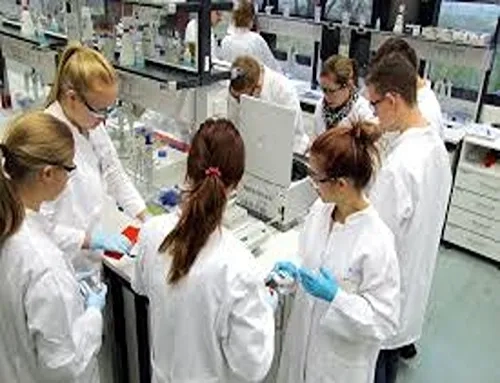

The Materialprüfanstalt (MPA) Braunschweig at the university is accredited according to ISO/IEC 17065 and ISO/IEC 17025 for certification and calibration, ensuring high standards in engineering.
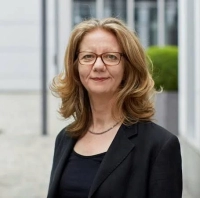
Psychologist Angela Ittel is an acknowledged expert in strategic university development, institutional cooperation, interdisciplinary research associations and conditions of the academic qualification phase, staff development, internationalisa... read more
Angela Ittel's academic career began with her studies at Florida International University (USA) and her doctorate at the University of California at Santa Cruz (USA). She then worked as a post-doctoral researcher at the Max Planck Institute for Human Development (Berlin), the Friedrich Schiller Universität Jena. She obtained her Habilitation at Freie Universität Berlin in 2005. In 2008, she was appointed Professor of Educational Psychology at the TU Berlin. Her research areas include career orientation and development of interests in young adults, especially in STEM disciplines. She was a editor of international journals and books and continues to work internationally as a peer reviewer.
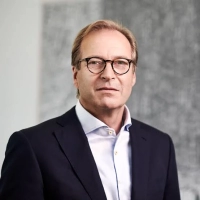
Professor Baumann brings a wealth of experience to the department of studies and teaching, including experience as Dean and Vice Dean of the Faculty of Life Sciences and as Dean of Studies in Pharmacy. In addition, he was active as a member of several senate commissions.
Professor Manfred Krafczyk was Professor for Computational Fluid Dynamics and Digital Engineering at the Institute for Computational Modeling in Civil Engineering at TU Braunschweig from October 2001 to September 2023. He led a research group dedicated to the development and application of numerical methods for the simulation of flows on parallel hardware as well as aspects of building informatics. The application of these methods ranges from microsystem technology and soil physics to aerodynamics and wind engineering.

1795
The Estates of the Duchy propose to close the Collegium and the then still existingHelmstedt State UniversityThe plan was to unite the various institutions in Braunschweig into a "Technical University." The Faculty of Technology, the Economic Academy, the Military Academy, and the School of Cameralistics were in... read more
1898
In 1905, Elisabeth Benecke was admitted as the first extraordinary female student - still as a unique case - to study in the Department of Chemistry.
April 25, 1907: Johanna Judenberg becomes the first female student to enroll in a regular degree program. She registers for mathematics, physics, and chemistry. In 1911, Ilse Rüder becomes the first female student to graduate; she had studied pharmacy. She is also the first female assistant to be employed at the university. Nationwide, only two other women besides her are studying pharmacy in 1908/09.
It wasn't until 1909 that women were fully admitted to university studies. Gertrud Frühling was the first woman to enroll as a student after the official opening.
1990
The data center has been completely overloaded for several years. The new IBM 3090-600J supercomputer will be delivered on January 2nd.
2005 - 2007
The TU is divided into faculties: Carl Friedrich Gauss Faculty (1), Faculty of Life Sciences (2), Faculty of Architecture, Civil Engineering and Environmental Sciences (3), Faculty of Mechanical Engineering (4), Faculty of Electrical Engineering, Information Technology, Physics (5) and Faculty of Humanities and Educational Sciences (6).