

Clausthal University of Technology is a research-intensive university with outstanding national and international networks. This is evidenced by its high level of external funding and numerous successful collaborations with universities, non-university research institutions, and companies regionally, nationally, and globally. The approximately 85 professors, 3,000 students, and 1,100 staff members enjoy short distances, a personal atmosphere, and the diverse landscape of the Upper Harz region, nestled within the UNESCO World Heritage Site of the Harz Mountains.
Clausthal University of Technology (TU Clausthal) is the region's most important economic driver and largest employer. Its academic community collaborates closely with industry, bridging the gap between fundamental research and practical application. The circular economy serves as the overarching thematic framework for this collaboration. With this university-wide approach to a resource-efficient circular economy, TU Clausthal is taking responsibility for the future. In times of emerging climate change and digitalization, it is committed to supporting the development of a sustainable society.
Clausthal University of Technology's degree programs regularly rank among the top programs in the CHE rankings. With approximately 50 percent of its students coming from abroad, representing more than 100 countries, Clausthal University of Technology embodies internationality. Alongside this global outlook, a strong practical focus, outstanding student support, and community engagement are key components of the university's future strategy.
Clausthal University of Technology is divided into three faculties, 28 institutes, and six interdisciplinary scientific centers. In addition to its main campus in Clausthal-Zellerfeld, the university has two further locations: the Energy Campus in Goslar and the "Drilling Simulator Celle – German Center for High-Performance Drilling Technology and Automation" in Celle.
| Acronym | TUC |
| Nickname | TU Clausthal |
| Colour | Green |
| Founded | 1775 |
| Undergraduate Programmes | |
| Postgraduate Programmes | 19 |
| Departments | 5 |
| Location | Clausthal-Zellerfield, Lower Saxony, Germany |
| Address | Clausthal University of Technology, Adolph-Roemer-Straße 2A, D-38678 Clausthal-Zellerfeld |
They shape our future on the basis of our history.
Clausthal University of Technology is closely linked to the town of Clausthal-Zellerfeld, the Harz region and its mining history. They are continuing this tradition and opening ourselves up to new ideas and people who come to us from Germany and abroad. Cohesion and solidarity include a conscious approach to diversity - this characterizes the Clausthal spirit. They work in partnership on the challenges of a sustainable society under the thematic umbrella of the circular economy.
They take our social mission seriously.
Good science is our mission. Transfer and dialog with politics, business and society is a central concern for us. They are an international university with a global scientific impact and at the same time make an active contribution to the development of the region.
They stand up for unity and freedom of research and teaching.
We place high demands on the quality of research and teaching, which can only develop in unity and freedom. We exercise this freedom responsibly. Outstanding achievements in research and teaching are held in the highest esteem at our university and are actively encouraged.
They promote the development of skills and personality.
They are the starting point and destination for students and researchers from all over the world. They take into account and integrate the diversity of our members to ensure openness to the world, creativity and equal treatment. In this environment, we enable a holistic, scientific education. This includes both the acquisition of academic skills and the development and unfolding of personality for individual career and life paths. Competence and personality characterize our alumni, with whom we remain connected in many ways.
They learn and teach in future-oriented and quality-assured degree programs.
For quality assurance and the further development of our degree programmes, we draw on instruments of university didactics, digitalization, quality management and evaluation. In this way, we gain insights into teaching and learning and incorporate them into the design of teaching and learning processes.
They are committed to our research profile.
They focus our research content and resources on our research fields, taking into account the guiding theme of the circular economy and constantly developing our profile in the areas of energy - materials - information. Outstanding scientific achievements in basic and application-oriented research are equally highly recognized by us. They work in an interdisciplinary manner on systemic approaches to the technical challenges of a sustainable society. They review the relevance of our research through publication and exchange at national and international level, thereby generating a high level of visibility in the scientific community.
They bridge the gap between fundamental findings and practical applications.
The practical orientation of our research and the implementation of our findings are our strength. Their application-oriented basic research provides the scientific basis for transfer to industry and society. They establish long-term networks and collaborations with science, industry and society based on mutual trust. They are committed to a high degree of transparency and neutrality.
They research, learn and teach with mutual respect and a high level of commitment.
They research, learn and teach transparently and openly in mutual appreciation of the knowledge and experience of all those involved. We work together across disciplinary and hierarchical boundaries. They see the diversity and manageability of our university as added value.
They, the members of the university management, create the framework conditions for good research and good teaching together with the bodies of university self-administration. They are developing Clausthal University of Technology into an attractive employer and support academic and non-academic staff at all career levels.
They, the researchers, are driven by our curiosity and strive for scientific knowledge. At the same time, they inspire enthusiasm for their disciplines and grow together in the research process. They are committed to good scientific practice and make use of opportunities for their further development.
They, the teaching staff, arouse enthusiasm for our subject. They use opportunities for further development and networking. They are aware of the heterogeneity of the student body. They focus on the students and support them responsibly in their development.
They, the students, work actively, consciously and willingly to achieve the desired degrees and accept the wide range of courses on offer. They take responsibility for the development of our skills and personalities. They make use of our creative opportunities and shape campus life through our actions.
They, the staff, support students and lecturers in the organization of learning, teaching and life and offer guidance and advice. By providing research-related services and supporting the research process, we actively contribute to the success of good research.
They are a universitas - a community.
Together we are TU Clausthal.
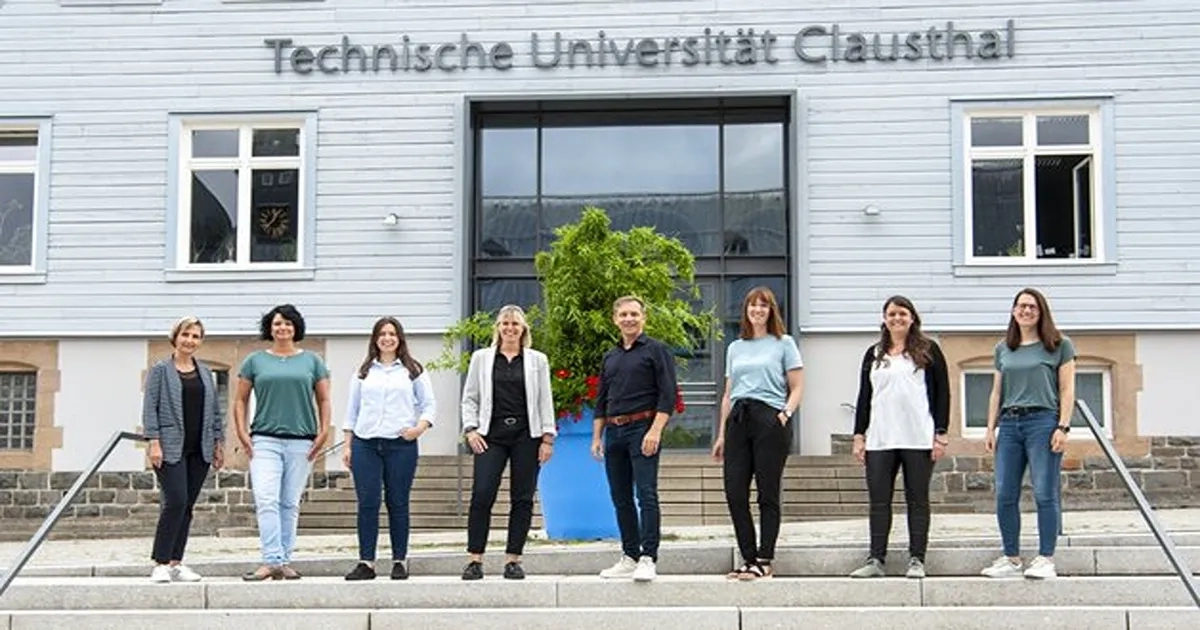
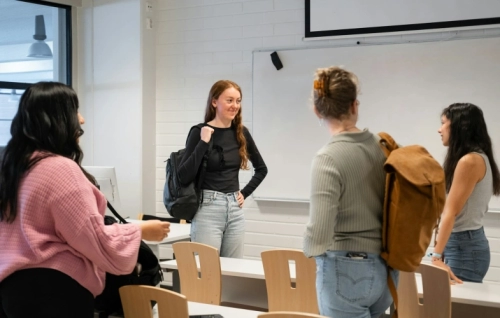
Clausthal University of Technology has been one of the most international universities in Germany for many years. This is due, on the one hand, to the high proportion of international students (more than half) and, on the other hand, to the international composition of the academic staff. Globalization is not only taught but also lived on campus, in lecture halls and laboratories, in student dormitories, and at joint celebrations and events.
Research, teaching, and transfer work in an interdisciplinary manner on the major social challenge of securing the sustainable supply of resources for society in the age of incipient climate change and advancing the energy transition. The focus is on systemic approaches to realizing the circular economy.
Clausthal University of Technology is a key economic force and major employer in its region. It closely connects research with industry, bridging theory and application. With a strong focus on the circular economy, the university promotes resource efficiency, sustainability, and innovation, supporting solutions for climate change and digital transformation.
Foreign applicants must hold a secondary school leaving certificate to be eligible for admission to Clausthal University of Technology.
Direct University Admission
If the foreign certificate is recognized as equivalent to a German certificate, the applicant can be directly admitted to the degree program—after passing a recognized German language exam such as DSH-2 or DSH-3, TestDaF (TDN 4), or an equivalent.
Applicants whose secondary school certificate is not equivalent may still receive direct admission to Clausthal University of Technology if they can prove successful completion of one or two years of university study in their home country. The exact requirement depends on their country of origin and prior education.
Admission via the Studienkolleg (Preparatory College)
Applicants whose qualification is only partially comparable to a German one must pass an assessment test at a Studienkolleg before starting their degree. The preparatory college for all universities in Lower Saxony is located at Leibniz Universität Hannover. A two-semester preparatory course is offered to help students prepare for this test. Participation requires passing an entrance exam. Application and registration for the Studienkolleg are handled by Clausthal University of Technology, where your application documents must be submitted.
Requirements for the Studienkolleg Entrance Test Invitation
Studienkolleg Hannover has updated the requirements for participating in the entrance test.
Prerequisites:
Please note: A new selection process for the entrance test has been introduced at Studienkolleg Hannover. Only applicants who pass the selection process will be invited to take the test. Receiving an invitation does not automatically guarantee the right to participate in the test.
Students transferring from another university, i.e., those who did not complete their Bachelor's degree at TU Clausthal, should refer to the admission requirements on the respective program page for information on the specific requirements for each Master's program. A Master's degree is comparable to the former Diplom degree. This degree also grants the right to pursue a doctorate .
From 15 December 2025, applications to Clausthal University of Technology can only be submitted digitally via the HISinOne application portal. Documents sent by post or email will no longer be accepted.
Please note that Clausthal University of Technology charges a processing fee for checking the admission requirements of foreign applicants (see downloads). Only complete applications for which the fee has been paid will be processed.
Once all documents have been received and the processing fee has been paid, your application will be processed. We will gladly answer queries regarding the status of your application by email.
Application process
- Register on the HISinOne portal and complete the online application.
- Upload the required documents as .pdf-files. (See checklist)
- Pay the processing fee as indicated and upload proof of payment, if necessary.
- Check your details and submit your application digitally.
- Track your status in the portal and respond to any queries in a timely manner.
Upload instructions
Submit clearly legible .pdf-files (all pages complete). Avoid mobile phone photos with shadows/skewed angles.
Application deadlines
- The following deadlines apply to programs taught in German (also for applicants for conditional admission):
- Winter semester: 1 October (Master's) and 15 October (Bachelor's)
- Summer semester: 1 April (Master's) and 15 April (bachelor's)
- For degree programs taught in English:
- Winter semester: 15 July
- Summer semester: 15 January
- Studienkolleg Hannover: Application for the entrance examination no later than two weeks before the schedules test date (here).
The application deadlines can be found in the general admission regulations for the consecutive and continuing education Master's degree programs at Clausthal University of Technology (AZO-M). (AZO-M) can be found here.
Email: [email protected],[email protected],[email protected]
Phone : +49 5323 72-4357, +49 5323 72-3671, +49 5323 72-5034
2002 – 2007 Student of electrical engineering, specializing in environmental technology/renewable energy, in Berlin
2006 – 2007 Project coordinator in the field of solar cell materials recovery at BAM, the Federal Institute for Materials Research and Testing, for the EU project RESOLVED – Recovery of Solar Valuable Materia... read more
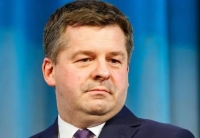
Nov. 2023 – present President of TU Clausthal
Oct. 1982 – Jan. 1989 Student of civil engineering at the University of Kassel
Degrees obtained:
Diplom I (Dipl.-Ing.), 1987
2016 – present German chair of the German-Greek-Polish Symposium on Recent Advances in Mechanics
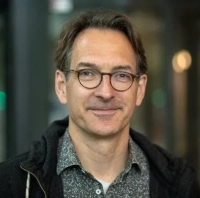
Oct. 2024 – present Vice-President for Academic Affairs at TU Clausthal
2013 – present Academic director of the DEV (German Enamelers Association)
2021 – present Chair of the board of the DGG (German Soc... read more
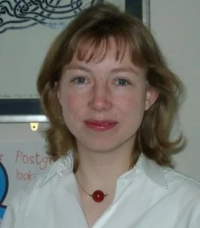
Apr. 2025 – present Vice-President for Research and Transfer at TU Clausthal
1919 to 1959 – Expansion of the university on the Spittelwiesen campus
1960 to 2006 – Expansion of the Feldgraben and Tannenhöhe campuses
2007 to present –Expansion in the region
1775:
Establishment of the Mining Schools
At the end of the 18th century, the Upper Harz region was one of the most important ore-mining districts in Europe. Half of the silver mined in Germany came from Clausthal and the surrounding area. To further develop mining, training was to be improved. From 1775 onwards, 24 young miners and smelter workers we... read more
2006– 2018: Research centers become established
Markets are becoming more global, and tasks more complex. Science is increasingly organizing itself across disciplines. At Clausthal University of Technology, this is leading to the establishment of interdisciplinary, industry-oriented research centers. Energy, materials, and simulation are the focus areas of these centers. Environmental technology, drilling technology, and digitalization have been added.
2015:
All-time high with 4963 students
Shortly after German reunification, more than 4,000 young people studied in Clausthal, but this number dropped to 2,400 by the turn of the millennium. A modernized range of courses, marketing efforts, and broader societal developments led to a steady increase in student numbers. In the winter semester of 2015/16, the highest enrollment in the more than 240-year history of higher education in Clausthal was reached: 4,963 students.
2020:
TU Clausthal – the University of the Circular Economy
The world's population is surpassing eight billion. At the same time, the consumption of raw materials, energy, water, and land is increasing. To counteract climate change and conserve resources, a fundamental shift in thinking is required. The linear economic system must be transformed into a holistic circular economy. Therefore,