
Founded in 1818 after a devastating famine, the University of Hohenheim is not only engaged in foundational research but traditionally also in developing innovative solutions for urgent social matters.
Today, the University has a unique profile, a wide international network, and works with distinguished specialists from all fields. The history, the mission statement, and a defined strategy lead the way for the further development of the University.
| Colour | Dark Blue |
| Founded | 1818 |
| Undergraduate Programmes | |
| Postgraduate Programmes | 28 |
| Location | Stuttgart, Baden-Württemberg, Germany |
| Address | Schloss Hohenheim 1, 70599 Stuttgart, Germany |
The University of Hohenheim is a diverse, complex, and dynamic organization. Its members work together in academic self-administration. The common basis is the legal mandate, and the binding principles are set down in the structural and development plan, which lays out the common strategic development goals in five-year periods. This mission statement describes the University’s self-understanding and the fundamental values behind its actions.
The statement has been formulated with a focus on the three major areas of the University: Research, studying and teaching, and the services supporting these areas. However, academic self-administration also means that individual members of the University are rarely active in only one single area. Usually, staff members are active at the same time in various functions at the university - as instructors, researchers, or in creating the requirements for successful science. The statements on the different areas are thus binding for all staff members, something that becomes clear in particular when discussing the understanding of leadership or respectful treatment of one another.
The University formulated this mission statement in 2015 while introducing a quality management system in all of its major areas. The mission statement is the starting point from which the individual areas derive their specific goals and measures for quality development and is simultaneously the framework upon which individual standards of behavior are oriented. The University views itself as a learning organization that reflects its principles. This mission statement is therefore developed further on a regular basis.
In July 2015, the Senate passed the University’s mission statement. For web viewing, the document has been broken down into individual sections:
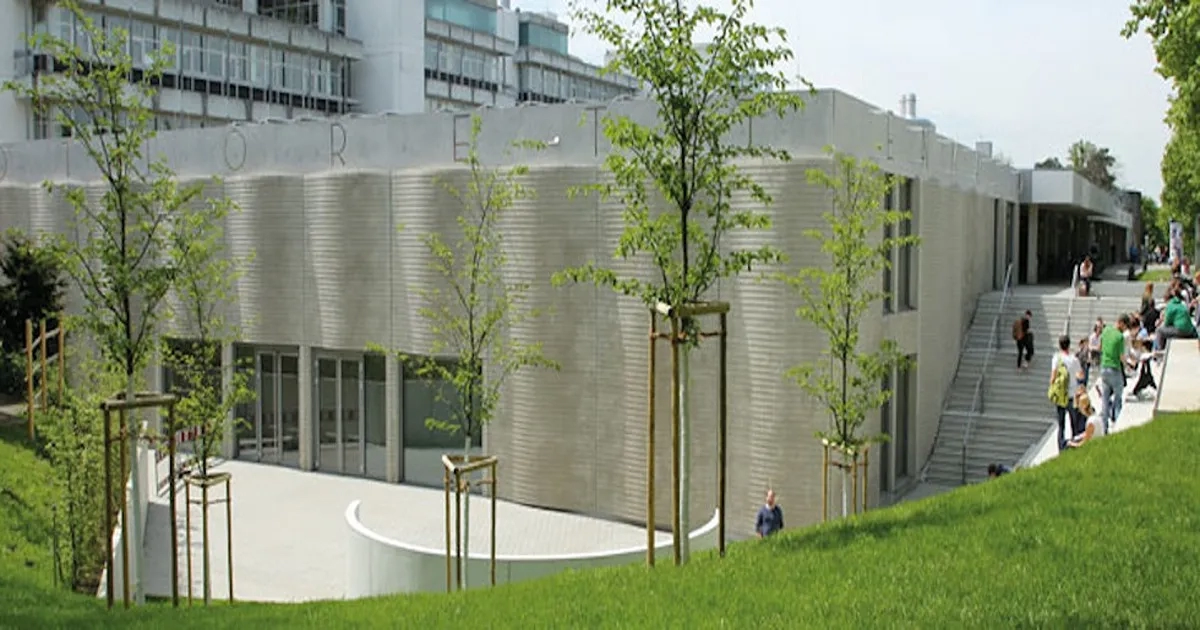
The degree programs at the University of Hohenheim are innovative and adventuresome. The pilot project “Mobile teaching” and “Humboldt reloaded”, promoting research oriented studying, have been given the Ars Legendi Prize for excellence in teaching and other awards.
Today, the University of Hohenheim is internationally ranked as one of Germany’s leading centers for agricultural research and food sciences, and is also strong and unparalleled in the natural, economic, social, and communication sciences. This combination enables the University to provide solutions to many global challenges from a single source. This is why the University maintains a worldwide network with many strong partners.
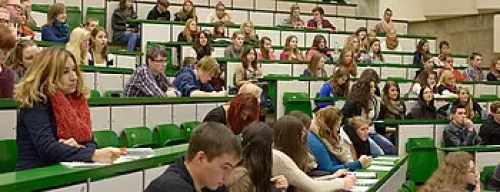
The University of Hohenheim continuously improves teaching across courses, programs, and organization. It integrates research and teaching to ensure high-quality education. Through its “Humboldt reloaded” program, it promotes research-based learning from the bachelor’s level. The university also focuses on digital tools, study entry support, and entrepreneurial skills, aiming to enhance student competence and sustain development through additional funding.
In order to successfully apply to the University of Hohenheim, you must fulfill the following admission requirements:
The requirements and deadlines for an application differ to some extent in the individual Master's degree programs. You can find all the necessary information on the application pages for the respective degree programs.
Apply online via the HohCampus application portal for the Bachelor's degree program of your choice and upload your application documents to the application portal. You can also check the status of your application there at any time. You can apply for a total of 3 degree programs. Multiple registrations are not permitted.
Email: [email protected]
Phone : +49 711 459-22015


The University of Hohenheim has been system accredited since 1 October 2020. With the system accreditation, the university receives more
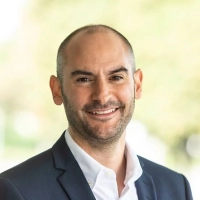
Prof. Dr. Schneider was born on 27 February 1965 in Blaustein-Herrlingen. He studied geography and physics at the University of Freiburg, where he obtained his doctorate in 1998 and habilitated in 2004. After holding a professorship in Physical Geography and Climatology at RWTH Aachen University from 2004 to 2015, he was appointed to Humboldt University in Berlin.
Before his election as President of the University of Hohenheim, he was heavily involved in academic self-administration, most recently as Vice President for Research at Humboldt University in Berlin from 2021 to 2025. He was also a member of the Review Board for Physical Geography of the German Research Foundation (DFG) from 2016 to 2024. He is a founding member of the Scientists for Future initiative.
She completed her studies in Modern German Literature and Media Studies, Art History... read more
From 2007 to 2012, Dr. Scheffer was employed as Personal Advisor to the President at the University of Hohenheim. From 2013 to spring 2016, she headed the policy department of the University of Hohenheim - the “Executive Management Office" - as department director with 10 employees. From February to March 2016, she held the office of Chancellor on an interim basis until she officially took up her duties on 1 April 2016.
Professor Hess was then first employed as a postdoc (2008), then assistant professor (2011), and finally associate professor (2013) at the Swedish University of Agricultural Sciences (SLU) in Uppsala, Sweden. During this time, he also took on the role of Interim Professor of Agricultural Marketing at the University of Göttingen from 2009 to 2010. From 2014-2019, he was Chair of Dairy and Food Industry Economics at Kiel University. Since 2019, he has been a tenured Professor and Director of the Department of Agricultural Markets at the University of Hohenheim. He is also Director of the Research Center for Cooperatives.
In addition to his academic career, since 2008 Professor Hess has also been involved in policy consulting projects for the World Bank and the FAO (Food and Agriculture Organisation).
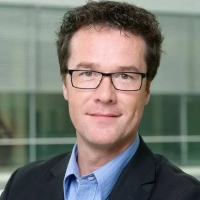
The innovation economist was born on 7 May 1969 in Ichenhausen and studied economics at the University of Augsburg, where he received his doctorate in 1999. Further scientific work at the Institut national de la recherche agronomique / Sociologie et économie de la recherche & développement (INRA/SERD) in Grenoble (1999-2000), at the University of Augsburg (2000-2006), at the Austrian Research Centers in Vienna (2002-2003) including a habilitation at the University of Augsburg (2004) was followed by a professorship for economic theory at the University of Bremen (2006-2009), a visiting professorship at the TU Delft in the Netherlands (2007-2008), and the appointment to the Faculty of Business, Economics and Social Sciences at the University of Hohenheim.
In the field of academic self-administration, he has been involved, among other things, as an elected representative of the mid-level faculty at the University of Augsburg, as an elected member of the Faculty Council for Economics at the University of Bremen, as Vice Dean in the Faculty of Business, Economics and Social Sciences at the University of Hohenheim and, since 2011, as Vice President for International Affairs at the University of Hohenheim.
As a postdoctoral researcher, she worked at the Swiss Federal Institute of Technology (ETH) Zurich before becoming head of a junior research group at the Institute of Microbiology in 1998. In 2004, she moved to the University of Zurich, where she was offered an assistant professorship for biochemistry at the Institute of Biology and completed her habilitation in biochemistry in 2008.
In 2009, she was offered a position at the Faculty of Natural Sciences at the University of Hohenheim where she has since been director of the Department of Cellular Microbiology since. Her main research interests include basic research on virulence and energy metabolism in microorganisms, especially in the cholera pathogen, but also - in cooperation with the Faculty of Agricultural Sciences - in typical bacteria of the rumen. In 2018 she was elected Vice President for Research.


The innovative power, solidarity with the people around the world, and the spirit of offering not only basic research but also practical solutions have stayed with the University of Hohenheim until the present.
1100 to 1799
First mentioned in a document in 1100, Hohenheim has experienced a varied history over the centuries. In 1785, Duke Carl Eugen von W... read more
1800 to 1899
As a result of devastating famines, an agricultural teaching, experimental, and model institute was founded in Hohenheim in 1818. The goal was to ensure the long-term and sustainable modernization of agriculture.
Since 2000
Individual and unique: this is how the University of Hohenheim presents itself today in research and teaching as a highly specialized and internationally oriented university with a unique range of subjects.
Hohenheim minds
In the more than 200 years of Hohenheim University's history, there have been countless people from the most diverse backgrounds who came to Hohenheim to study, research, teach, and work here. Each and every one of them has helped shape our university and at the same time taken memories, knowledge, networks, friendships, and experiences from Hohenheim with them and carried them into the world.
Experience history on campus
The University of Hohenheim’s historical tour is a long, relaxing stroll through the former Palace grounds and today's University campus.
It offers guests a total of 28 stations with interesting information about places worth seeing when it comes to the history of Hohenheim. In addition, during the walk you can gain insights into the goals and tasks of selected Hohenheim teaching and research institutions.