
It's a success story: Founded in 1974, the University of Osnabrück has earned an outstanding reputation over the past five decades – regionally, nationally, and internationally. Its research strengths lie, among other things, in membrane biology , comparative law , artificial intelligence , cognitive science , and migration studies . These areas, which conduct research and teaching at the highest level, are embedded in a comprehensive academic canon encompassing numerous other disciplines. The university impresses with exceptional research achievements characterized by interdisciplinary collaboration. Research profile
Of particular importance is the international orientation and visibility of the university.
The research results obtained are directly incorporated into a highly qualified academic education in the form of "research-based learning" . Study program
To ensure that teaching of high academic quality is successful, a whole range of measures is needed for the comprehensive qualification of young scientists. Information for doctoral candidates and postdocs
No standstill: With the successfully acquired strategy project Developing its potential strategically, the university continues its ambitious profile development in research, teaching, leadership culture and internationalization.
With its approximately 14,000 students and 1,800 employees, the university shapes and enriches the cultural offerings of the city of Osnabrück. Examples include: the jointly organized Osnabrück Peace Talks and the joint Erich Maria Remarque Peace Center .
And the economy also benefits from the university through the transfer of scientific research results into companies.
In summary, the University of Osnabrück's motto is: Researching and teaching together with responsibility for a future worth living in.
| Acronym | UOS |
| Nickname | Uni Osnabrück |
| Founded | 1974 |
| Location | Osnabrück, Lower Saxony, Germany |
| Address | University of Osnabrück, Neuer Graben/Schloss , 49074 Osnabrück |
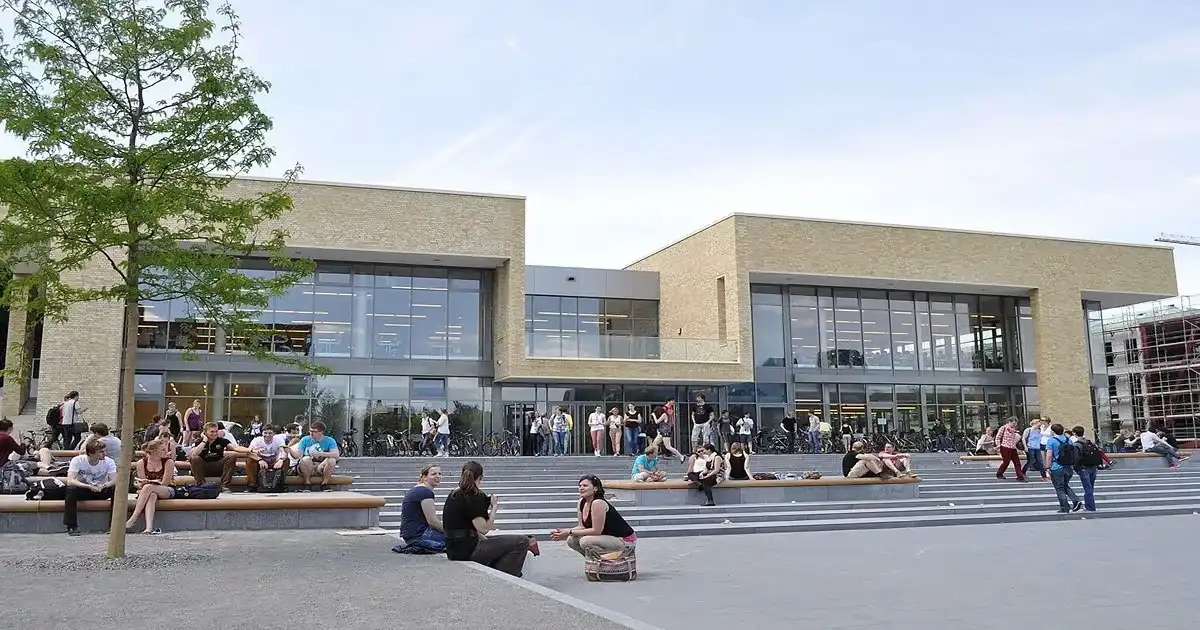
Around 14,000 students study at the university, supported by about 1,000 professors, lecturers, and researchers across eight departments. The university offers around 180 modern Bachelor’s and Master’s programs in humanities, social sciences, sports, mathematics, computer science, natural sciences, law, economics, linguistics, literary and cultural studies, theology, art, music, and textiles, preparing students for future-oriented careers.
University of Osnabrück secured €16.25 million from the Lower Saxony Ministry of Science and Culture and the Volkswagen Foundation to strengthen its profile, excellence, and visibility. Its 2025–2030 strategy focuses on research, teaching, and governance to promote sustainable development and increase the university’s impact on society.
With about 1,800 employees and a €180 million budget (2023), the University of Osnabrück is a major employer and economic force in the city. Strong partnerships with businesses provide students with early practical experience. Beyond teaching and research, the university promotes knowledge transfer to society and supports peace and tolerance through initiatives like the Erich Maria Remarque Peace Center and the Osnabrück Peace Talks.
A unique feature of University of Osnabrück is its location, with many buildings near the historic old town and easily accessible by foot or bicycle. Humanities, social sciences, and law are based in the city center, while natural sciences, mathematics, and computer science are on the Westerberg campus. The university also features a Botanical Garden used for teaching, research, and relaxation.
In order to study at Osnabrück University, you must fulfill general or course-specific access requirements.
The term "undergraduate" refers to a course of study that leads to a first professionally qualifying university degree, e.g. the academic degree "Bachelor" or "First State Examination in Law". In order to be able to take up such a course of study, you need a corresponding higher education entrance qualification. In principle, proof of this can be provided by both school and vocational qualifications:
In addition to the relevant higher education entrance qualification, some degree courses require proof of further course-specific requirements such as language skills or a successful entrance test. Detailed information on the specific requirements can be found in the admission regulations for the desired degree program. These regulations are linked at Degrees and Regulations under the respective degree.
Language requirements
In order to study at Osnabrück University, you will need very good German language skills for many degree programs.
Unfortunately, Osnabrück University itself does not offer any preparatory German courses as part of the application procedure. An application can therefore only be successful if the necessary German language skills are already proven with the application for admission to the degree program.
Please note that the proof of German language skills must not be older than two years.
If you do not have a C1 German certificate or equivalent certificate at the time of application, you can apply with a recognized B2 certificate. If your application is successful, you will be provisionally admitted to the course. However, you must submit a C1 German certificate for enrollment.
Entrance requirements for international students
An access requirement for admission to a Master's degree program is a relevant and professionally qualifying university degree - usually a Bachelor's degree. In addition, some Master's degree programs require proof that specific requirements have been met.
The specific requirements can be found in the admission regulations for the desired degree program. These regulations are linked under Degrees and Regulations under the respective degree.
Important to know: It is also possible to apply for a Master's degree program if the Bachelor's degree has not yet been obtained at the time of application, but it is expected that the degree will be obtained in the first Master's semester and 150 credit points must be proven. In this case, special deadlines must be observed and particularly careful planning is required. For teacher education programs, it should also be noted that proof of admission to the Bachelor's thesis must be submitted at the latest at the time of enrollment. Please note the following information on the preliminary enrollment in a Master's degree program.
Language requirements
In order to study at Osnabrück University, you will need very good German language skills for many degree programs.
Unfortunately, Osnabrück University itself does not offer any preparatory German courses as part of the application procedure. An application can therefore only be successful if the necessary German language skills are already proven with the application for admission to the degree program.
Please note that the proof of German language skills must not be older than two years.
If you do not have a C1 German certificate or equivalent certificate at the time of application, you can apply with a recognized B2 certificate. If your application is successful, you will be provisionally admitted to the course. However, you must submit a C1 German certificate for enrollment.
The application, admission and enrollment procedure for the winter semester 2026/27 will begin at Osnabrück University on May 11, 2026 with the opening of the portal HISinOne-Student Administration. From this date, you can apply online via the portal for a study spot on a Bachelor's degree course with restricted admission, for the First State Examination in Law and for Master's degree courses and Doctorates or enroll for a study spot on Bachelor's degree courses without restricted admission. Please note the information on admission restrictions.
Email: studierendensekretariat@uni
Phone : +49 541 969 4850, + 49 541 969 7777


In 2008, she came to Osnabrück as a junior professor and, after declining offers from Giessen and Cologne, was appointed professor of biology education. Since October 1, 2016, she has served as part-time Vice President for Research and Early Career Development at the University of Osnabrück and played a key role in developing the UOS 2020 future strategy.
Since October 1, 2019, Prof. Dr. Susanne Menzel-Riedl has been the President of the University of Osnabrück. On November 7, 2022, she was elected as the new chairwoman of the Lower Saxony State University Conference. Since December 2023, she has also been Vice President for Higher Education System and Organization of the German Rectors' Conference.
In 1997, Hötker initially became head of department in the finance division of the Church Office of the Evangelical Church in Germany (Hanover), then head of the financing department, and from 1999 head of all financial management at the von Bodelschwingh Institutions Bethel in Bielefeld. In 2000, he moved to the Münster Chamber of Skilled Crafts as head of the "Internal Administration" department and was elected managing director by the general assembly in November 2002.
Dr. Wilfried Hötker has been Vice President for Personnel and Finance at the University of Osnabrück since January 1, 2005.




The University of Osnabrück was initially planned as an integrated comprehensive university. In addition to the Osnabrück and Vechta campuses of the Lower Saxony University of Education, the Osnabrück University of Applied Sciences, founded in 1971, w... read more
The law establishing the Universities of Oldenburg and Osnabrück was passed in 1973. The founding committee dissolved in February 1974, and teaching finally commenced in the summer semester of 1974. The university began as a "reform university" with two campuses (Osnabrück and Vechta), a concept that was far from complete and would undergo significant structural and curricular changes in the following decades.
From the 1980s onward, the university gradually began to consolidate : it evolved away from being solely a teacher training institution and expanded its course offerings to include economics and law . Key milestones during this period included the restructuring of departments , the establishment of the first Collaborative Research Centers , the founding of institutes , and the expansion of campus facilities. The establishment of interdisciplinary institutes such as the Institute for Migration Research and Intercultural Studies ( IMIS ) and the Institute for the Cultural History of the Early Modern Period ( IKFN ), as well as the creation of graduate schools, were significant building blocks in the further development of research and teaching. The separation from Vechta in 1995 enabled the university to develop more purposefully at a single location.
While there were initial considerations to locate at least parts of the university on the city's outskirts, Osnabrück ultimately developed into a university integrated into the city . It has significantly shaped the cityscape over the past 50 years and continues to engage with the city's community in many ways, for example through the Osnabrück Peace Talks or the Osnabrück Knowledge Forum . The establishment of new institutes such as the Institute for Cognitive Sciences and the European Legal Studies Institute ( ELSI ) are further examples of the university's increasing influence beyond the region.
Vibrant, research-intensive, and quality-conscious , with a broad, scientifically grounded range of study programs – this is how the University of Osnabrück presents itself today. It is harmoniously integrated into the Osnabrück, a city of peace steeped in tradition and boasting a rich cultural life, was founded during the university boom years. As a medium-sized German university, it has established itself and adapted to the competition for top talent and sufficient funding. Employees appreciate the family-friendly atmosphere. The "UOS 2020" future concept, adopted in 2017 and comprising six research focus areas, forms the basis for the university's development in the coming years.