
University of Potsdam is a public university in Potsdam, capital of the state of Brandenburg, northeastern Germany.
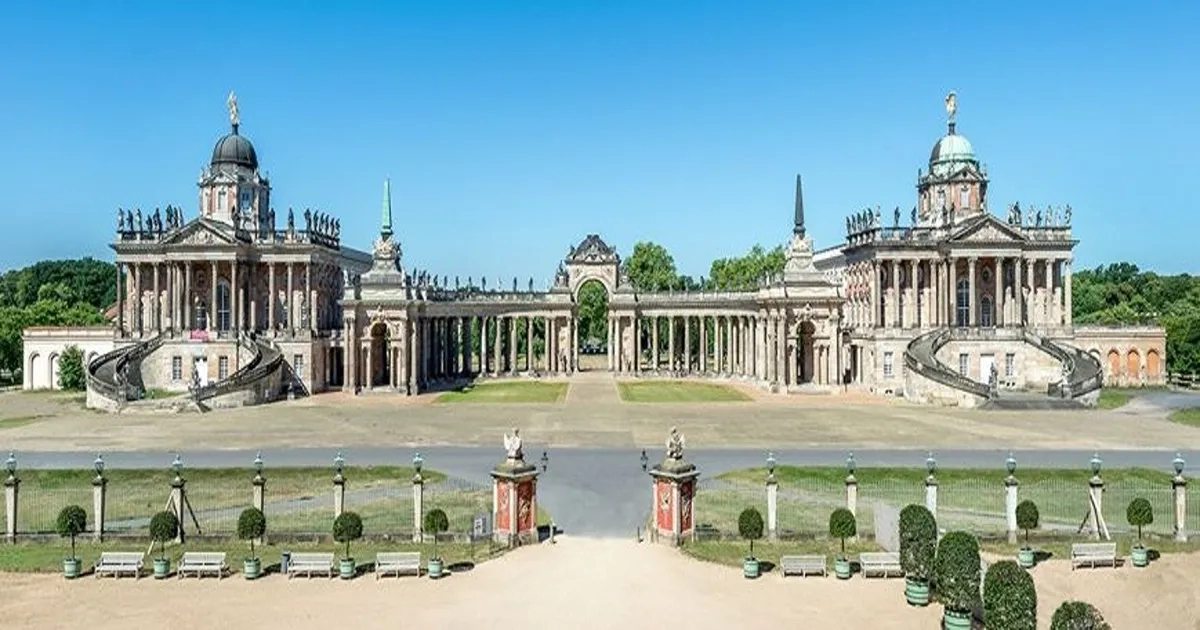
The university is mainly situated across three campuses in the city. Some faculty buildings are part of the New Palace of Sanssouci which is known for its UNESCO World Heritage status.
The University of Potsdam is Brandenburg's largest university and the fourth largest in the Berlin-Brandenburg metropolitan area. More than 8,000 people are working in scholarship and science.
In 2009 the University of Potsdam became a winner in the "Excellence in Teaching" initiative of the Stifterverband für die Deutsche Wissenschaft (Business innovation agency for the German science system).
| Acronym | UP |
| Nickname | Univ. Potsdam |
| Colour | Blue and White |
| Founded | 1991 |
| Location | Potsdam, Brandenburg, Germany |
| Address | University of Potsdam, Am Neuen Palais 10, 14469 Potsdam |
The University of Potsdam, the largest university in the state of Brandenburg, is oriented towards interdisciplinary research profiles in combination with several extramural research institutions in the natural sciences, human sciences, the humanities and the social sciences. Research and teaching mutually reinforce high quality and attractiveness. They form the foundation for the transfer of knowledge and technology, as well as the Start-up Service, which focuses on the needs of society and the labor market.
The University of Potsdam will continue to improve upon its strengths in order to gain even more attention at the national and international level: - An internationally competitive research university is emerging from the close collaboration between the faculties, cross-faculty institutions and the University’s service departments, extramural research institutions and cultural institutions within the region. - Our students’ personal and professional futures are the foundation for the teaching of crosssubject key competences and research-based knowledge in internationally compatible programs for undergraduate and graduate degrees. The acquisition of knowledge and skills drives our students. The University is therefore opening up space for studies and shaping the course offerings in line with the realities of students’ lives. - A comprehensive palette of education and continuing education for the next generation of scholars and professors, as well as unbureaucratic evaluation procedures, constitute the core of a concept for increasing the quality of research-based teaching. - The University of Potsdam sees a particular challenge in the interlacing of scholarly research and teacher education. The University has a distinguished teacher education program that acknowledges the realities of school and instruction while also incorporating the latest research findings in the field, and has a high proportion of practical phases. The University stands for equal opportunity and family friendliness, internationalism, tolerance and sustainability. This is expressed in particular by innovative concepts and programs that extend beyond the region.
Although it is not easy to balance family, studies, and a job, it is possible, nevertheless. It needs determination and an iron will, but also organizational skills and a solid network. Potsdam’s university contributes to this. It has made it its motto to become a family-friendly university. Prams on the campus, three-year-old children in the library, and families in the cafeteria have become a normal part of everyday university life.
Enhancing our strengths, developing a clear profile, becoming more visible: these are the objectives of our research support program, with which the University of Potsdam seeks to better position itself in the national and international competition for outstanding scientists and funding. Two funding lines are established, which are distinguished by specific forms of organization, funding instruments, and evaluation periods.
The University of Potsdam is a lively community of teachers and students. Research findings are directly incorporated into teaching, and students can feel the intellectual dynamism in their fields. Comprehensive quality management ensures this on all levels, from Bachelors’ programs to graduate or postgraduate studies.
Since its founding in 1991, the University of Potsdam has excelled in research and teaching and is well-positioned both on a national and international scale. Achieving this under consistently difficult economic conditions speaks for the quality and motivation of our professors, research, and administrative staff.
Entry requirements vary by program. View the program page for requirements.
Entry requirements vary by program and course. View the program page for requirements.
Apply through the application portal.
Email: [email protected],[email protected]
Phone : +49 331 977-1760



Professor Günther has conducted research projects in the areas of ent... read more
Professor Günther has coordinated several large research projects funded by the German Ministry of Education and Research, the Ministry of Economics and Technology, and the German Research Foundation. From 1996 until 2006 he served as Director of the Berlin-Brandenburg Graduate School of Information Systems. Oliver Günther has held visiting faculty positions at the European School of Management and Technology in Berlin, the École Nationale Supérieure des Télécommunications and the Pôle Universitaire Léonard de Vinci in Paris, the University of California at Berkeley, and the University of Cape Town.
Oliver Günther has served as a consultant and board member to various government agencies and high-tech companies. He was Chairman of the Board of Poptel AG, Germany's first voice-over-IP company, and Chief Technology Officer of Teamtoolz, Inc., a San Francisco-based cloud service provider for the marketing and advertising industry. Professor Günther was President of the German Informatics Society in 2012-2014. He is a member of the admissions committee of the German National Merit Foundation.




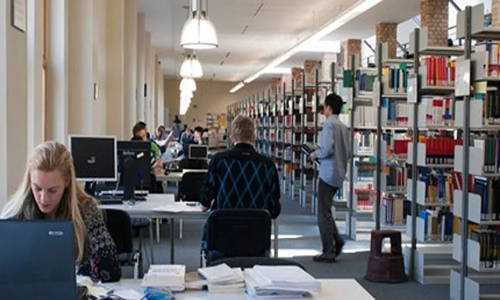
Some parts of the university are located in historical buildings that have been named as World Heritage Sites by UNESCO. The university library and the Institute of History can be found in a part of the commons in the park of Sanssouci, at the New Palace, as can the Institute of Mathematics in the former stables.
The other campuses, Babelsberg and Golm, are also of histor... read more
The current Faculty of Law is located in Babelsberg/Griebnitzsee in the former presidial and administrative buildings of the German Red Cross (1939/40). Other lecture halls and buildings were built in the 1950s directly behind the Schloss Babelsberg for the Academy of Justice and the East German state.