The University of Regensburg (UR), founded in 1962 and originally designed as a regional university, has developed into a renowned center of research and teaching with a strong tradition in international cooperation. With its twelve faculties, it has a broad variety of disciplines with excellent individual research, innovative, inter- and multidisciplinary research projects and an attractive quality-assured range of courses. The UR stands for diversity, cosmopolitanism and shaping the future.
| Acronym | UR |
| Nickname | Uni Regensburg |
| Colour | Blue and While |
| Founded | 1962 |
| Location | Regensburg, Bavaria, Germany |
| Address | University of Regensburg, Universitätsstraße 31, 93053 Regensburg |
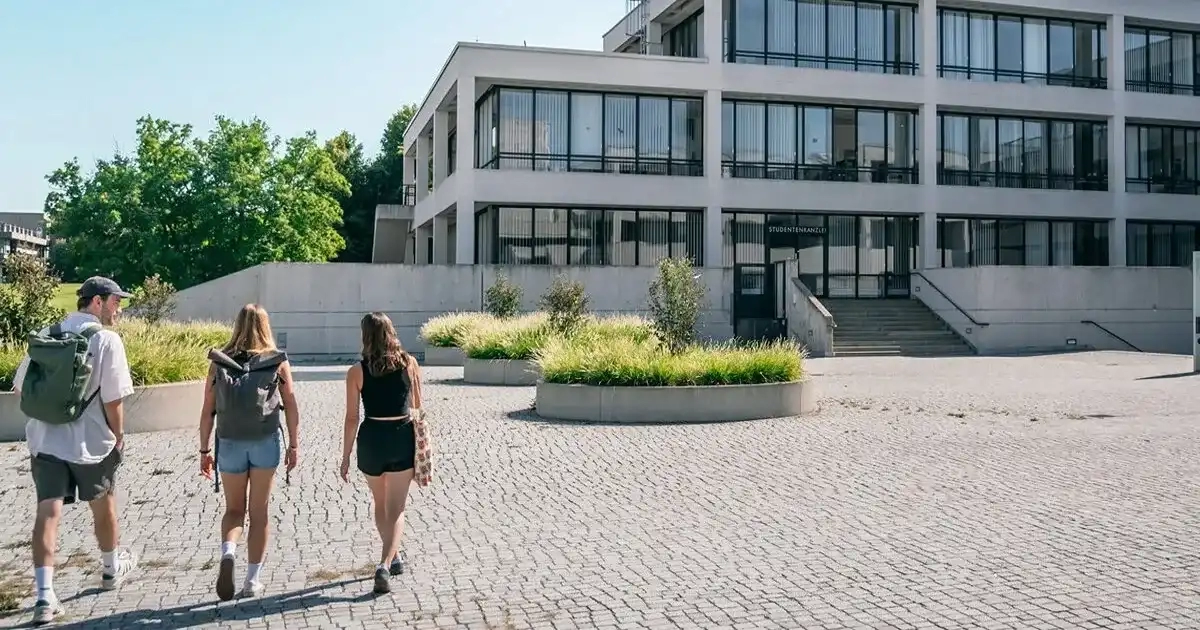
It is the task of our university community to research and teach responsibly and to pursue the major questions and issues of our time and the future. Our researchers are committed to shaping the future of our society in a science-led manner and are involved in current public discourse on a scientific basis and with sound findings and perspectives.
At their core and in their self-image, science and universities thrive on change, openness and transformation and are therefore per se nuclei for future-oriented change and reorganisation. Through our research-based teaching, we empower young people to think independently, scrutinise critically and act reflectively - thus placing the future of all of us in responsible hands.
Sixty years after its founding, the University of Regensburg is well positioned in terms of research, teaching and knowledge transfer. 23,000 people from over 100 countries study, research, teach and work together on our campus. At the University of Regensburg, we understand cosmopolitanism and diversity as the starting point and prerequisite for free and knowledge-oriented science.
For most subjects, applications are made centrally via the online platform Campusportal.
Applicants from EU countries who are interested in studying human medicine or dentistry should send their application to the hochschulstart service office. Further details on the procedure can be found in the information sheet.
Master's applications are reviewed by the faculties directly. In principle, applications must be submitted directly to the faculty. Registration via the central platform is only possible after admission has been granted by the faculty.
It should be noted that a small number of degree programs require applicants to apply directly via the Camspusportal platform. The list can be found in the information sheet.
View the requirements on the program page.
The University of Regensburg conducts a purely online application process. You can find the application deadlines in our application information sheet.(Opens new window). (Not accessible)(PDF document). These deadlines must be strictly adhered to. These are absolute deadlines! The application is only considered valid once it has been submitted online. For special applications and applications for higher semesters, the upload of certain documents may be mandatory or optional.
Email: [email protected],[email protected]
Phone : 0941 943-5544

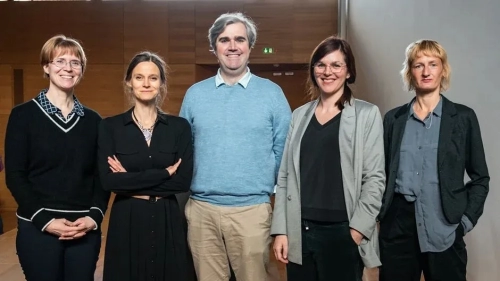
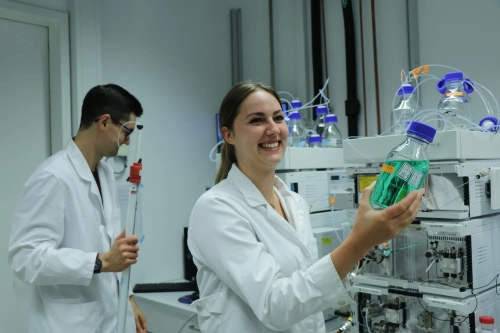

Udo Hebel, born in 1956, studied American Studies, English Studies, ... read more
Several years of study and research in the USA took him to, among other places, the University of Michigan, Ann Arbor, MI , and Harvard University ; visiting professorships included one at Colorado College, Colorado Springs, CO . From 1990 to 1995, he was a research assistant at Johannes Gutenberg University Mainz. In 1995, Hebel was appointed Professor of American Literature and Cultural History at the University of Potsdam; from 1996 to 1998, he was Professor of North American Literature at the University of Freiburg.


Duke Albrecht IV of Bavaria had already had the idea of founding a university in Regensburg in the 15th century: However, his efforts to found a university in the city on the Danube failed due to political circumstances. A second attempt shortly after the Second World War also came to nothing due to Bavaria's financially strained situation.
The joint efforts of the city of Regensburg, the region and the university association founded in 1948 were finally successful. Following the state parliament's decision, the construction of the university began in the mid-1960s: the unive... read more
On 6 November 1967, teaching began on campus with 35 professors and 661 students. In this first winter semester of 1967/68, the university had three faculties: The Faculty of Law and Economics, the Faculty of Philosophy and the Faculty of Catholic Theology. In the winter semester of 1968/69, the natural sciences were added as a further faculty, and in the summer of 1972, the Regensburg University of Education was integrated into the university.
From the very beginning, the University of Regensburg has focussed on research and research-based teaching and has thus developed into the largest and best-performing university in Eastern Bavaria.
On 1 January 2022, the former Regensburg Center for Interventional Immunology (RCI) - now known as the Leibniz Institute for Immunotherapy (LIT) - was officially accepted into the Leibniz Association.
Based on a cooperation between the University of Regensburg and the Flossenbürg Concentration Camp Memorial, the Zentrum Erinnerungskultur was founded in December 2020. The centre celebrated its official opening in 2022. The cooperation project sees itself as a scientific and discursive forum for the examination and critical reflection of historical and contemporary cultures of remembrance and promotes interdisciplinary remembrance research.
in 2022, the University of Regensburg was awarded the contract by the Bavarian state government for its concept for the establishment of the Medical Campus Lower Bavaria (MCN), which is geared towards the need for doctors in the region. As a result, 110 new study places in medicine will be available from the winter semester 2024/25.
The Bavarian Ministry of Science selected the philosopher Prof. Dr Julie Casteigt in 2024 in the "Distinguished Professorship" funding line of the Bavarian top professorship programme. Professor Casteigt impressed the jury with her innovative studies on Meister Eckhart, Albert the Great and the medieval commentaries on the Gospel of John, in which she presented pioneering approaches for a new understanding of these texts.
in 2025, the German Research Foundation (DFG) approved funding for the joint Cluster of Excellence "Center for Chiral Electronics" (CCE) of the University of Regensburg, Martin Luther University Halle-Wittenberg, Freie Universität Berlin and the Max Planck Institute of Microstructure Physics in Halle. The cluster was launched in January 2026 and will initially run for seven years. The aim of the research cooperation is to develop innovative concepts for energy-efficient and high-performance electronics - based on the hitherto little-used property of chirality.
In January 2026, the University of Regensburg has four Collaborative Research Centres / Transregios funded by the German Research Foundation (DFG) as well as four DFG-funded Research Training Groups and elevenERC Grants from the European Research Council.