
Founded in 1419, the University of Rostock is the oldest university in the Baltic Sea region. True to its motto "Tradition and Innovation," the University of Rostock has continuously developed. Its many new buildings today represent the university's modernity.
The founding faculties, besides the Faculty of Arts (today's Faculty of Philosophy), were the Faculty of Law and the Faculty of Medicine. In 1432, Theology completed the classical canon of subjects within the historical studium generale. In the mid-20th century, the Faculty of Agricultural Sciences, the Faculty of Economics and Social Sciences, the Faculty of Mathematics and Natural Sciences, and in 1950 – a novelty at the time among traditional German universities – a Faculty of Engineering were added. From this, at the beginning of 2004, a Faculty of Mechanical Engineering and Naval Architecture and a Faculty of Computer Science and Electrical Engineering were established.
Thus, the university now comprises nine faculties, which are subdivided into numerous institutes and clinics. In addition, the Interdisciplinary Faculty, as a central academic institution, connects researchers and students from all disciplines. Here, the research priorities that have grown out of the university's tradition are brought together. At the same time, this institution serves to sharpen the university's profile through an interdisciplinary combination of strengths in cross-disciplinary communication and collaboration.
The University of Rostock is more of a hidden gem than a mass-market university. Anyone who appreciates both a university steeped in tradition and a willingness to innovate will find the University of Rostock the right place. Approximately 12,800 students study here, choosing from an exceptionally broad range of over 170 degree programs.
In recent years, the University of Rostock has undergone significant substantive and organizational changes through a cross-faculty, interdisciplinary profiling strategy, enabling it to address future societal challenges in an innovative and competitive manner. This has included, in particular, the pooling of expertise and research activities in the cross-faculty departments of the Interdisciplinary Faculty (INF). The establishment of the INF is a unique feature of the University of Rostock. It consolidates research resources and interests in cross-faculty focus areas to optimally utilize the existing interdisciplinary potential on-site, fostering a focused and interconnected diversity.
| Motto / Slogan | “Traditio et Innovatio |
| Founded | 1419 |
| Departments | 4 |
| Location | Rostock, Mecklenburg-Vorpommern, Germany |
| Address | University of Rostock, 18051 Rostock |
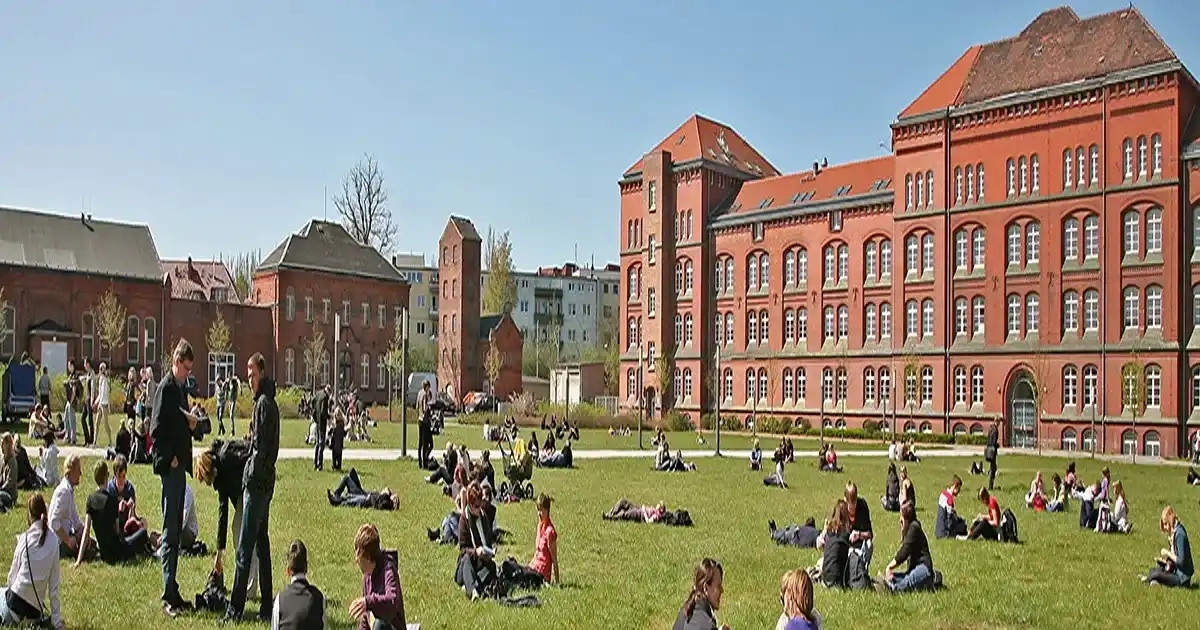
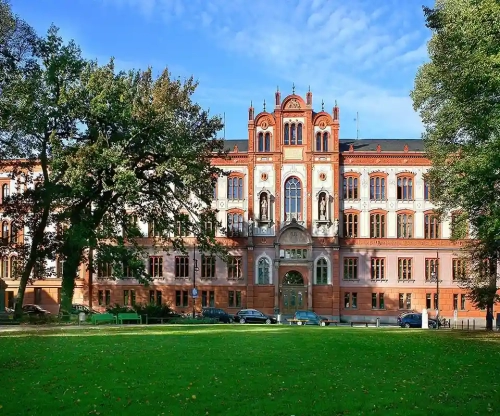
The University of Rostock was founded in 1419; therefore, it is the first university in the Baltic Sea region. Here had already been researched and taught 75 years before Columbus discovered America. Today, the many new buildings and the varied choice of study programs reflect the innovative power and modernity of the University of Rostock, quite the motto “traditio et innovation”.
The University of Rostock creates interdisciplinary opportunities for all university members to pursue initial and continuing education in the field of sustainability. Within the framework of university didactics, training and professional development programs for lecturers on the topic of Education for Sustainable Development (ESD) are being developed, expanded, and established on a permanent basis.
In order to be able to study at the University of Rostock, the admission requirements described here must be met. Irrespective of this, admission restrictions ("numerus clausus") apply to certain degree programs. In the case of degree programs with restricted admission, an application is therefore required in addition to meeting the admission requirements.
To study at the University of Rostock, one of the following university entrance qualifications must be fulfilled:
For individual degree programs, other subject-specific requirements are required in addition to the university entrance qualification as a general requirement.
First of all, the university entrance qualification must be checked. This means that it must be clarified whether the school or university degree acquired abroad entitles you to take up studies at the University of Rostock. You can find this out yourself in advance via the Infoportal zu ausländischen Bildungsabschlüssen (anabin). You can access anabin ? here.
For Master's degree programs, further subject-specific requirements often apply. You can find more information on this on the page on ? Admission Requirements for Master's Degree Programs
For individual degree programs, other subject-specific requirements are required in addition to the university entrance qualification as a general requirement.
Application channels depending on the intended degree programme
Once the questions regarding university admission and German language skills have been clarified, you can apply. Depending on which degree programme you would like to take, there are different ways to apply.
UNDERGRADUATE:
International prospective students for all undergraduate degree programmes excepts human medicine and dentistry.
International prospective students for human medicine and dentistry.
POSTGRADUATE:
International prospective students for Master's degree programmes.
Email: [email protected]
Phone : +49 381 498-1012
The university operates under the national accreditation system supervised by: Accreditation Council
The Chancellor is supported by the staff in his office as well as by the staff units for appointments, occupational safety, internal audit and organizational development.
Throughout the 15th and 16th centuries, the University of Rostock had about 400 to 500 students each year and was among the most important universities in Germany and Northern Europe at the time, with many of its students originati... read more
On the occasion of the 500th anniversary of the university, Albert Einstein and Max Planck received honorary doctorates on 12 November 1919. This made the University of Rostock the world's first institute of higher learning to award this honour to Einstein. The doctorate was not revoked during the Nazi rule in Germany (1933–1945), despite such orders by the Nazis. The reason for this remains unknown. Psychologist David Katz and professor of dentistry and dean of the medical faculty Hans Moral [de] lost their posts in 1933 among others.
The end of the Second World War in 1945 brought many changes. The university, now finding itself in the Soviet Zone of Germany (the later German Democratic Republic), was re-opened on 24 February 1946. The Faculty of Law was closed in 1951, a Faculty of Agriculture was introduced in 1950 and in 1951 saw the opening of a Department of Shipbuilding (renamed Faculty of Technology in 1963). The University of Rostock was the first traditional university in Germany to open a technical faculty. In 1952, the Faculty of Aviation was opened, but eventually relocated to Dresden.
In 1976 the university was renamed Wilhelm-Pieck-Universität after Wilhelm Pieck, the first president of the German Democratic Republic. The renaming was annulled after the German reunification.
External funding increased by 83 % between 2005 and 2010 alone and currently is above 65 million euros per year. Over 500 million Euros have been invested in the university infrastructure since 1991, reaching 750 million euros by 2015. The numbers of young people from Germany and of international students who choose Rostock as a place to study are increasing every year. As of today [when?], students from at least 99 different countries have studied at Rostock. In 2007, the University of Rostock reorganized its research capacities into three profile lines: Life, Light & Matter, Maritime Systems, and Aging of Individuals and Societies. In 2010, a fourth profile was added, called Knowledge – Culture – Transformation.