
Visionary since 1829: The University of Stuttgart stands for outstanding, internationally recognized research and first-class teaching in one of Europe's most vibrant industrial regions. It is a reliable employer, a partner for technology transfer, and committed to interdisciplinarity.
| Founded | 1829 |
| Location | Stuttgart, Baden-Württemberg, Germany |
| Address | University of Stuttgart, P.O. Box 10 60 37, 70049 Stuttgart, Germany. |
The University of Stuttgart’s mission statement describes the way the university conceives of itself and on what it bases its actions. The mission statement informs all goals the university sets and the actions it undertakes. These are its key propositions:
Our vision is “Intelligent systems to benefit society”.
Our goals, deriving from our vision and mission statement, are set for the long term and are fundamental to the way we operate.
Our seven strategic goals span the overarching strategic framework and serve to orient our operational objectives and the measures that will help us reach them.
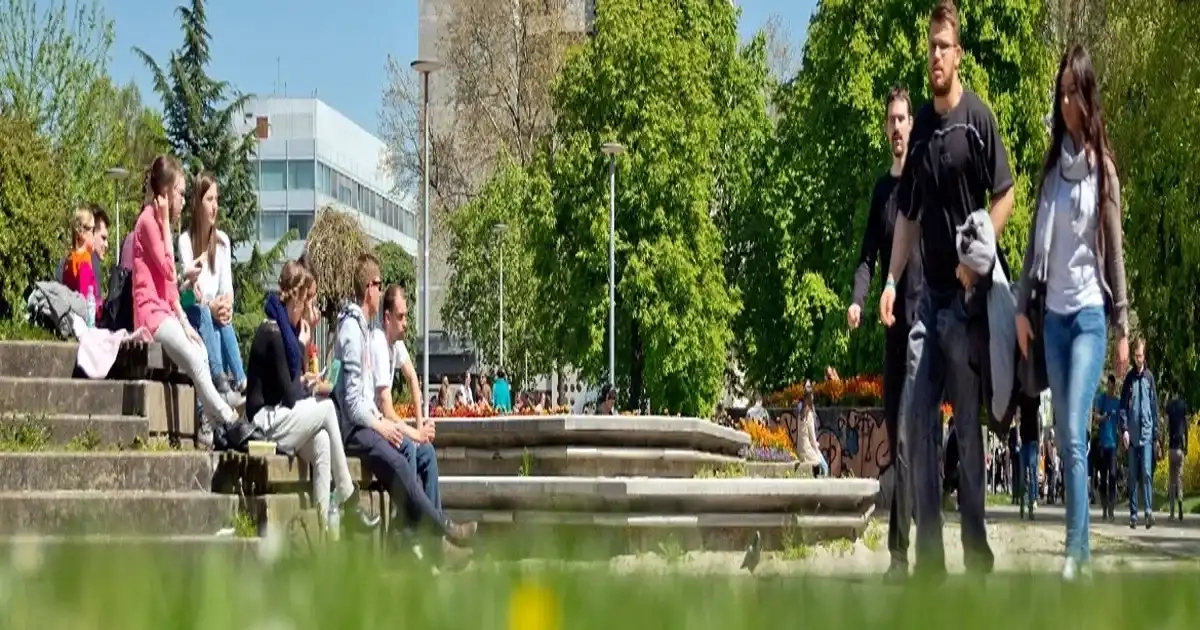
We are one of Germany’s most exciting universities, with campuses in the city center and Vaihingen focused on learning, research, and innovation. Students receive strong support from start to graduation. Programs are practical and closely linked to industry and business, offering excellent career prospects and a high quality of life for local and international students.
The University of Stuttgart is a leading technology-focused university with global reach. It serves as a hub for academic and industrial research, offering high-quality, research-led teaching. Through the “Stuttgart Way,” it integrates engineering, sciences, humanities, and social sciences. Its vision is “Intelligent Systems for a Sustainable Society.”
The University of Stuttgart is one of the leading research universities in Germany and worldwide. For years, its researchers have been conducting internationally competitive cutting-edge research and have repeatedly demonstrated their success in the competition for funding and excellence projects.
With its research-led teaching and interdisciplinary profile, integrating engineering, natural sciences, humanities, economics, and social sciences, the University of Stuttgart has established itself as a nationally and internationally sought-after place to study. Stuttgart offers not only excellent opportunities for studying and working, but also a superb quality of life.
There are different types of admission qualifications for studying at the University of Stuttgart. These are differentiated according to nationality and type of degree. View the admission qualification on this page.
International Applicants:
When applying via C@MPUS, you need to upload various documents. These documents must be scanned.
A bachelor's degree, which usually needs to be in a related field, or an equivalent qualification, is typically only one of several requirements for admission to a master's program. You can find subject-specific application information on the program websites.
English-language Master's programs:
Sufficient English language skills are a prerequisite for admission to an English-language Master's program. Furthermore, specific admission requirements and application deadlines may apply. Please check the website of the respective program for details.
International Applicants:
When applying via C@MPUS, you need to upload various documents. These documents must be scanned.
UNDERGRADUATE:
All application processes are handled via the University of Stuttgart's campus management system, C@MPUS . All single-subject Bachelor's degree programs with restricted admission (NC) but without an entrance exam also participate in the Dialogue-Oriented Service Procedure (DoSV) . This means that in this case, you must also register on the hochschulstart.de portal .
Before you apply, we recommend that you carefully read the admission regulations of the degree programs and pay attention to the application deadlines.
International applicants (non-EU) without German university entrance qualification (Abitur) : International applicants who are neither citizens of an EU country nor possess a German university entrance qualification (usually the Abitur) apply only via C@MPUS and not additionally via DoSV. Furthermore, special admission criteria
apply depending on the country of origin .
German language skills :
The language of instruction at the University of Stuttgart is German, with the exception of international and English-language Master's programs. Therefore, good German language skills are absolutely essential for successful studies and must be demonstrated.
POSTGRADUATE:
To apply for a Master's program at the University of Stuttgart, you must register in our campus management system C@MPUS. Then follow the individual application steps in C@MPUS.
Phone : +49 711 685-83644
Apply For Admission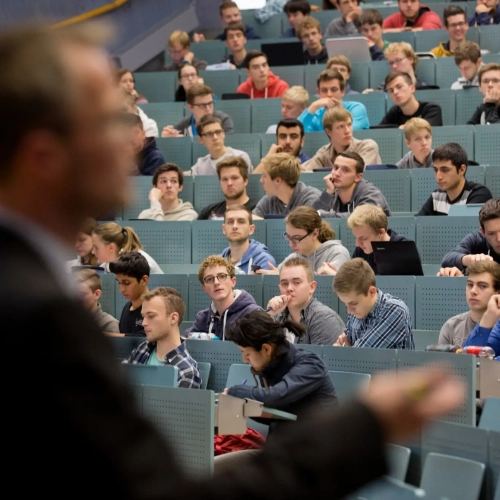
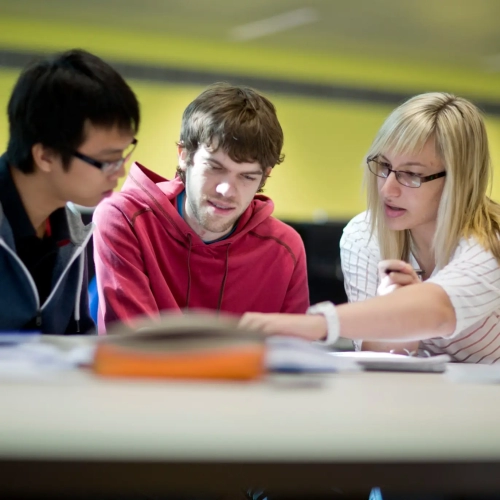

n 2009, the University of Stuttgart started to establish a comprehensive quality management system for learning and teaching. In 2012, the so-called Stuttgart evaluation model (SEM) was reviewed and accredited by the Swiss accreditation agency AAQ.
In 2019, the University of Stuttgart was reaccredited. As a result, the University of Stuttgart is the second reaccredited university in Germany as well as the first reaccredited university in Baden-Wuerttemberg and among the TU9 universities. The accreditation is valid until 2027. This reconfirms that the University of Stuttgart has the adequate instruments and procedures to systematically maintain and develop the quality of its study programs in accordance with national and international standards.
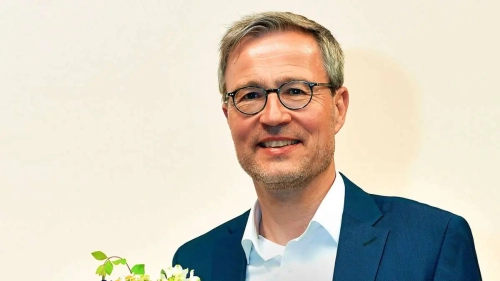
Professor Peter Middendorf has been Rector of the University of Stuttgart since October 2024. He represents the university and is chairman of the Rectorate, the Extended Rectorate, and the university bodies.
Chancellor of the University of Stuttgart
2011 – 2023
Vice Rector for Human Resources and Gender at the Vienna University of Technology
2003 – 2011
Vice Rector for Personnel, Resources and the Advancement of Women at the Academy of Fine Arts Vienna
Information technology is strategically important for a research-oriented university. The Vice-Rectorate for Information Technology drives technological innovation and prepares the university for the challenges of digitizing research and teaching. It consolidates IT expertise and resources across the university.


1848: The Fehling's test
From 1839 to 1883, Hermann C. Fehling was a professor of chemistry at the Stuttgart Polytechnic School. He discovered Fehling's solution for determining sugar content. But Fehling's legacy extends far beyond a single solution. He made chemistry a flagship discipline in Stuttgart.
1886: First motorized carriage
Gottlieb Daimler studied mechanical engineering in Stut... read more
1911: First professorship for aeronautical engineering
Alexander Baumann became the first professor of "airship travel, flight technology and motor vehicles" in Germany. From these beginnings, the current focus areas in aerospace engineering and automotive research developed.
1962: Lightweight construction
Since the 1960s, the University of Stuttgart has developed into a center for lightweight construction, focusing on natural structures and load-bearing systems based on biological models. Key figures in this field include Frei Otto and Jörg Schlaich.
1972: Discovery of the tobacco mosaic virus
Karl-Wolfgang Mundry was involved in the discovery of the tobacco mosaic virus in 1972 and helped to decipher fundamental questions in molecular biology. He was one of the originators of the "Technical Biology" degree program, which today is one of the most successful reform projects in the German biology landscape.
1996: High-performance computing
Even in the 1950s, the performance of Stuttgart's mainframe computers was comparatively high for the requirements of aerospace engineering. In 1997, the High-Performance Computing Center (HLRS) became the Federal Computing Center. This was a further step towards its current focus on simulation technology.
The Icaré II solar glider is a project of the Faculty of Aerospace Engineering. It is a masterpiece of lightweight construction. In 1996, it achieved a world record: the solar glider covered the greatest distance to date, flying 350 kilometers without a stopover.
History in years
Founded in 1829
as the "United Realschule and Trade School" by King William I of Württemberg
1832
Spin-off of the trade school
1840
Polytechnic School
1876
??Renamed Polytechnic
1881
Founding of the Materials Testing Institute
1890
Technical University
1900
Right to award doctorates in technical and scientific subjects (“Dr.-Ing.”)
1905
First female student
1922
Right to award doctorates for the General Department (Humanities)
1944
Almost total destruction of all buildings
1946
Reopening of the Technical University and reconstruction with the help of teachers and students
1953
Right to award doctorates in the humanities
Construction begins in Stuttgart-Vaihingen in 1957
1967
Renamed University of Stuttgart
1979
Right to award doctorates in the social sciences
1997
Start of the internationalization program
2000
Establishment of a University Council
2002
Restructuring into ten faculties
2007
Success in the Excellence Initiative of the Federal and State Governments: Cluster of Excellence “Simulation Technology” (SimTech) and Graduate School “Advanced Manufacturing Engineering” (GSaME)
Start of the continuing education programs of the Master:Online Academy
2010
Founding of the MINT College
2013
Construction of the ARENA2036 research campus
2015
Fastest high-performance computer in the European Union: Hazel Hen
2015/16
28,000 students.