
At the University of Vechta, we place questions about the future of society at the heart of academic discourse across all of the different stages of human life. From education studies and early years education, to teacher training, to social and human services and gerontology. The University with its mission statement ‘Responsibility is Key’ has designated the 17 Sustainable Development Goals (SDGs) of the United Nations 2030 Agenda and the Responsible Research and Innovation (RRI) framework as core points of reference for research and teaching. Through responsible research and teaching, the University aims to promote sustainable solutions to contemporary social challenges which are in harmony with the needs of society.
Looking to the future, shaping the change – this is what the University of Vechta aspires to in sending its graduates out into the world. They are provided with the skills needed to function as primary, and lower secondary school (Hauptschule and Realschule) teachers, for the social and human services sector, for business ethics, for transformation management in rural areas, for cultural and education studies, and for the social sciences. The University actively discharges its responsibility as an educational institution and consequently a provider of essential services, and through its profile embraces the challenge of contributing to the shaping of a social, sustainable, democratic society that is fit for the future.
| Nickname | Uni Vechta |
| Motto / Slogan | Responsibility is Key |
| Founded | 1830 |
| Location | Vechta, Lower Saxony, Germany |
| Address | Universität Vechta Driverstraße 22 49377 Vechta |
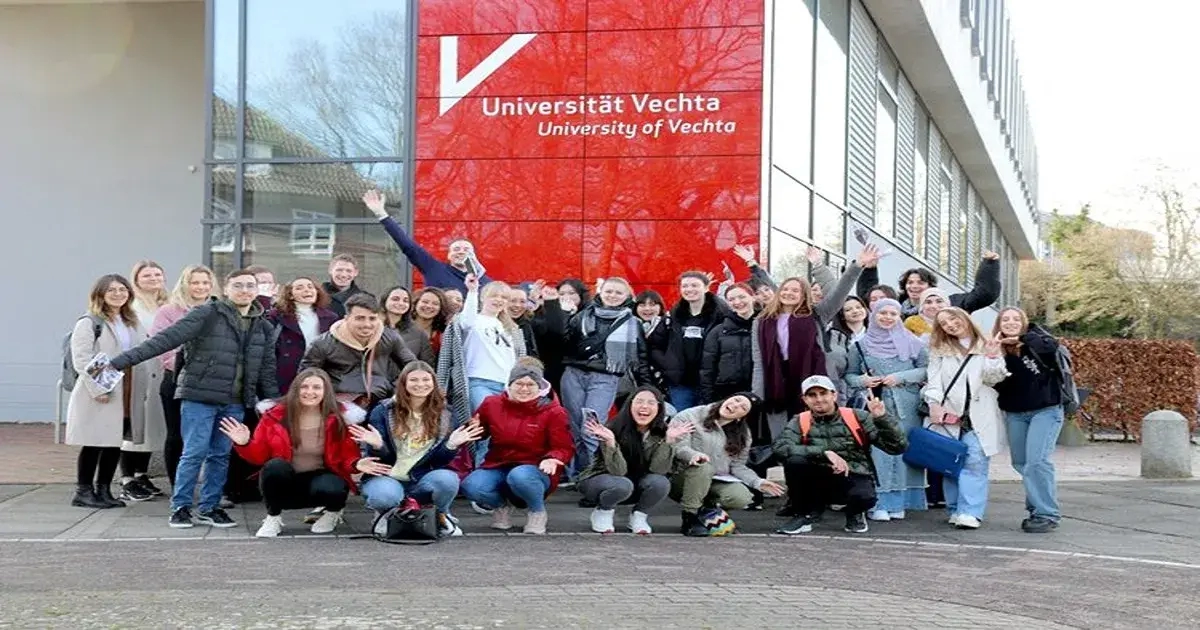
The University of Vechta strives to integrate the concept of sustainable development into all its functional areas – research and teaching, administration and campus design. This page is intended to show how the University of Vechta contributes to sustainable development.
The team of the International Office advises and supports international students in all matters relating to their studies - from preparing for university to the transition to working life.
The university town of Vechta is located in the heart of the Oldenburger Münsterland, an economically strong region in north-west Germany. In an international comparison, Germany is one of the safest countries in the world. Germany is a democratic country in which legal certainty applies. Millions of people from all over the world live here.
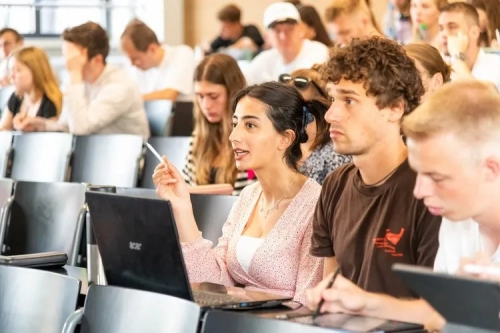
The University of Vechta is a state university with accredited degree programmes and a long tradition. As a small, modern university, it is characterised by innovative courses, small learning groups, and personal advice. From university sports to events at the International Garden or student initiatives - the university offers a wide range of social activities.
Entry requirements vary by program. View the program page for requirements.
Entry requirements vary by program. View the program page for requirements.
Step 1: Choose your degree programme
Step 2: Clarify the entry requirements
Step 3: Learn German and obtain a language certificate
Step 4: Apply for a study programme
Step 5: Apply for a visa (if required)
Step 6: Plan your start into the degree programme
Email: [email protected]
Phone : +49 (0) 4441 15 613, +49 (0) 4441 15 0
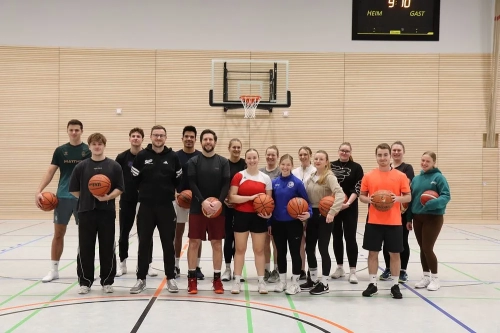
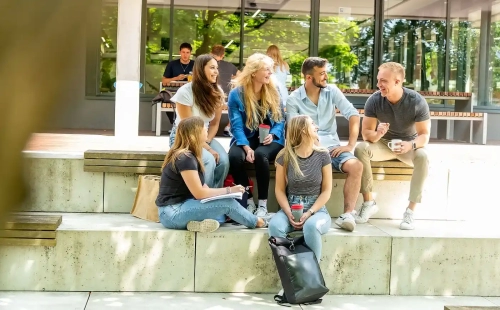
Sports: Open to all: Our varied sports programme offers distraction from studies and contributes to a healthy study-life-balance.
These agencies are part of:
In 1830, Augustus, Grand Duke of Oldenburg (image), founded a Normalschule (normal school) for his Grand Duchy of Oldenburg. Following the example of Bernhard Overberg (1754-1826) from Münster, a representative of progressive education, the aim was to ensure qualified teacher training for the Catholic areas in South Oldenburg. Unlike in the Protestant Lehrerseminar (teacher training seminar) in Oldenburg, women were also allowed to attend courses at the Normalschule in Vechta. From 1881, female teachers were trained in the newly established Lehrerinnenseminar (teacher training seminar) of the Order of the Sisters of Notre Dame. The courses at the Normalschule took up to one year and were attended by an average of 30 participants.
Further milestones followed in the past years. In 2016, the Constitution was modernised. Faculty structures were introduced, the Service Sector was restructured and research institutes were realigned. In 2017, the Koordinationsstelle Transformationsforschung Agrar (Coordination Centre for Sustainability Transformation Research on Intensive Agricultural Regions) (trafo:agrar) was established and the An-Institut für Kulturanthropologie (Affiliated Institute for Cultural Anthropology) of the University of Vechta was founded in Cloppenburg. In 2019, the Graduate Centre was established and the dining hall was expanded. The Media Literacy Centre as well as a start-up centre in cooperation with the districts of the Oldenburg Münsterland and city of Vechta were launched in 2021. New research institutes have been established and the new Master’s degree programme Transformation Management in Rural Areas is to examine transformation processes in rural areas from an academic point of view. Under the difficult circumstances of the coronavirus pandemic of 2020/21, the university has been able to provide the best possible, even though largely online, teaching offers and examination services by acting quickly and consistently, and to ensure high-quality working and studying conditions. In 2023, work began on the construction of a modern two-field sports hall on the campus, which was officially opened in 2025.